
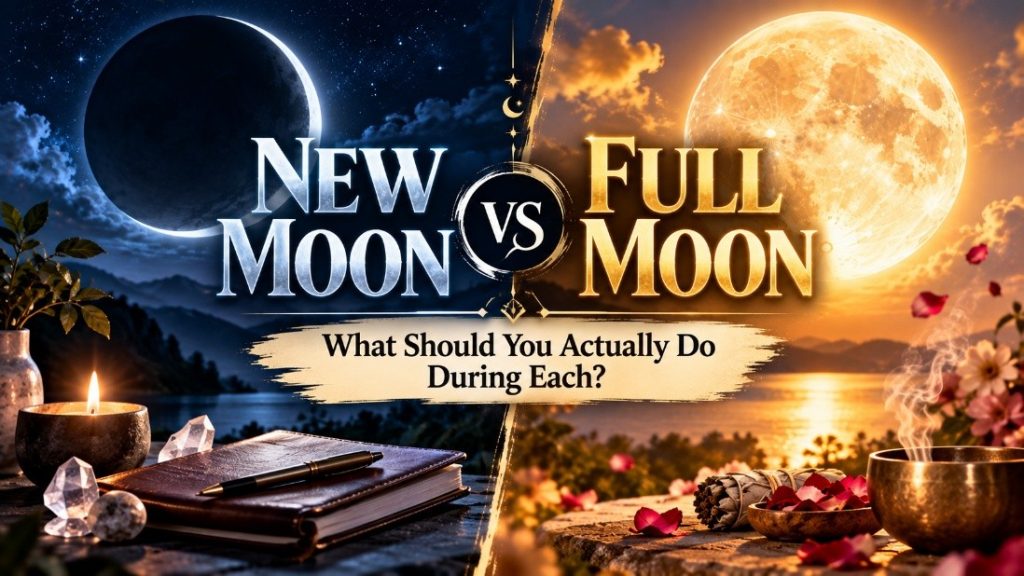
A simple guide to understanding the energy of the New Moon and Full Moon, setting intentions, releasing what no longer serves you, and creating your own Moon ritual.
You know there is a New Moon. You know there is a Full Moon. But do you actually know what you are supposed to do during each?
Many of us have been there. We write manifestations on every Moon phase. We burn or tear things on the Full Moon without quite knowing why. We make Moon Water, charge our crystals, open a journal, set intentions and try a ritual we saw online. Then we quietly wonder whether we are doing it right.
Over the years, I have found that the confusion is not about effort. It is about understanding. Once you see the simple logic behind each phase, everything becomes lighter. The Moon cycle can be viewed as a beautiful rhythm of intention and release. That is the heart of this article, and I hope it makes Moon rituals feel easy, personal and free of pressure.
Why Does the Moon Matter in Spiritual Practice?
Look up at the sky over a month and you will see the Moon change shape. It begins almost invisible, grows into a bright circle, then slowly fades again. This is the lunar cycle, and it takes about 29 and a half days.
Across cultures and traditions, people have found symbolic meaning in this journey. In India, lunar days and fasts like Purnima and Amavasya have long been part of spiritual life. Many other traditions around the world also mark the Moon’s phases. I see the Moon as a mirror for our own inner cycles. Please remember that this is a spiritual and symbolic practice, not a scientific claim about the Moon changing our behaviour.
The cycle moves like this: Beginning, Growth, Fullness, Release, Rest, and Beginning again.
Here is a simple framework to hold in your mind:
- New Moon: Set intentions and plant seeds
- Waxing Moon: Take aligned action and build momentum
- Full Moon: Celebrate, reflect, and release
- Waning Moon: Cleanse, rest, and make space
What Is a New Moon?
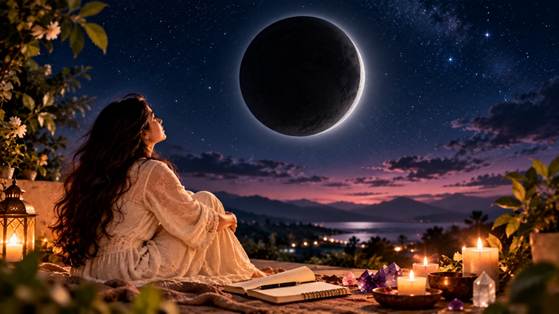
A New Moon happens when the Moon sits between the Earth and the Sun. The side that is lit faces away from us, so the Moon looks dark or barely visible.
In spiritual practice, this darkness is not emptiness. It is a blank page. The New Moon is traditionally associated with new beginnings, intention setting, planting seeds, quiet reflection, fresh starts and inner work.
For me, the New Moon represents the pause before something new begins.
“The New Moon reminds me that not every beginning needs to be loud. Some of the most important beginnings happen quietly, inside us.”
What Should You Do During a New Moon?
If you are new to Moon rituals, start here. You do not need to do everything below. Pick what feels right.
1. Set Intentions
An intention is different from a wish. A wish says, “I hope this happens.” An intention says, “This is what I am ready to move toward.” Be specific and meaningful.
Instead of: “I want to be happy.”
Try: “I intend to create more space for peace, meaningful relationships and activities that nourish me.”
2. Journal
Keep a notebook for your Moon practice. Here are a few prompts to begin with:
- What am I ready to begin?
- What do I want to create in the next lunar cycle?
- What deserves more of my energy?
- What version of myself am I ready to step into?
- What would feel like real progress a month from now?
3. Visualise
Sit quietly for a few minutes and imagine your intention already unfolding. See where you are, how you feel and what your day looks like. Let it feel real in your body, not just in your mind.
4. Use Affirmations
Speak them slowly, in the present tense:
- I am open to new beginnings.
- I plant my intentions with clarity and care.
- I trust myself to take the next right step.
- I welcome growth into my life.
- I am ready to create what I desire.
5. Meditate
Sit for 5 to 10 minutes. Breathe in gently and let your breath slow down. If your mind wanders, simply bring it back to your breath. You are not trying to empty your thoughts. You are learning to listen to them.
6. Create a Simple Intention Ritual
A ritual does not need to be elaborate. A candle, a journal, a quiet space and one clear intention are enough. What matters is your presence, not your props.
Want to Go Deeper With Lunar Practice?
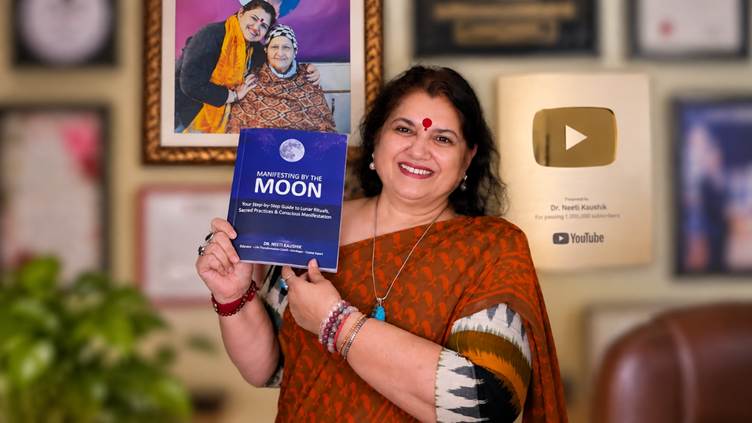
If you want to take this practice beyond a simple New Moon intention, I have written a complete guide to working with lunar cycles in my book, Manifesting by the Moon: Your Step-by-Step Guide to Lunar Rituals, Sacred Practices & Conscious Manifestation. It is meant for anyone who wants to understand how to work with each phase in a grounded and conscious way.
What Is a Full Moon?
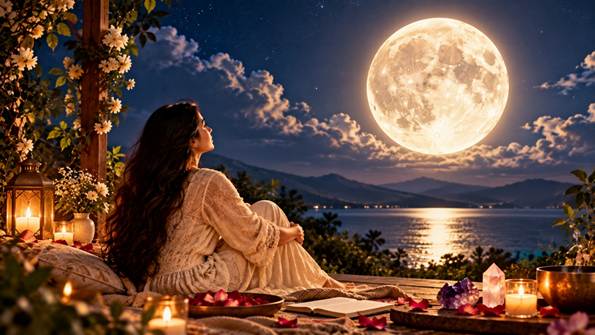
A Full Moon happens when the Moon is on the opposite side of the Earth from the Sun. Its Earth-facing side is fully lit, and the Moon appears round and bright in the night sky.
Spiritually, the Full Moon is traditionally associated with completion, illumination, gratitude, reflection, emotional awareness, celebration and release. Many people use it as a symbolic time to look honestly at what they see in their lives.
“If the New Moon asks, ‘What do I want to create?’ the Full Moon asks, ‘What am I ready to see clearly and release?'”
What Should You Do During a Full Moon?
1. Reflect
Look back at the past lunar cycle and ask yourself:
- What has changed since the last New Moon?
- What have I learned?
- What has grown?
- What am I proud of?
2. Practise Gratitude
Write down three things you are thankful for. Include one small thing, one person and one quality in yourself. Gratitude turns our attention to what is already whole.
3. Release
Release is one of the most misunderstood parts of Moon rituals. I do not see it as throwing people or situations away. I see it as releasing attachment, unhealthy patterns, resentment or beliefs that no longer serve you. This could be an old belief, a fear, self-doubt, a habit or a situation that no longer aligns with who you are becoming.
Please do not end relationships or make big decisions impulsively because it is a Full Moon. Release is an inner shift first.
4. Journal
Try these prompts:
- What am I ready to see clearly?
- What is weighing on me that I can put down?
- Where did I grow this month, even in small ways?
- What did I learn about myself?
5. Forgive
Forgiveness is an internal process. It does not always mean reconciliation or saying that what happened was okay. It means loosening the grip that resentment has on your heart, so you can breathe more freely.
6. Rest
Not every ritual needs to be elaborate. Sometimes the Full Moon can simply be a quiet pause. Step outside, look up, take a deep breath and say thank you. That is enough.
Full Moon Rituals and Release Practices
Some readers want more structure for Full Moon work, such as release practices, Moon Water, affirmations and conscious reflection. I have shared these in detail in Manifesting by the Moon, with simple steps you can follow month after month.
New Moon vs Full Moon: The Difference at a Glance
| New Moon | Full Moon |
| New beginnings | Completion |
| Set intentions | Reflect |
| Plant seeds | Observe what has grown |
| Manifest | Give thanks |
| Visualise | Release |
| Look inward | Gain clarity |
| Ask “What do I want to create?” | Ask “What am I ready to let go of?” |
If you want one memorable way to hold this:
New Moon = CREATE
Full Moon = COMPLETE
What About the Waxing and Waning Moon?
The days between the two big moments matter too. They give the lunar cycle a rhythm, so the New Moon and Full Moon do not become isolated rituals.
Waxing Moon is the stretch after the New Moon, when the light grows. Symbolically, it is associated with growth, action, building and momentum. This is the time to work on the intentions you have set.
Waning Moon is the stretch after the Full Moon, when the light fades. It is associated with release, rest, reflection and simplification. This is a good time to clear clutter, slow down and let things settle.
7 Things You Can Do Throughout the Moon Cycle
- Journal
- Meditate
- Use affirmations
- Practise gratitude
- Reflect and analyse
- Take aligned action
The most meaningful part is consistency and conscious reflection, not having a grand ritual every month. A few honest minutes will always beat an elaborate ceremony you feel pressured to perform.
Common Mistakes People Make With Moon Rituals
1. Trying to manifest everything at once. Choose two or three intentions. Focus creates clarity.
2. Treating rituals like a magic shortcut. A ritual is a beginning, not a guarantee. Manifestation asks for effort too.
3. Writing intentions without taking action. If your intention has no next step, it stays a nice thought.
4. Releasing something impulsively because of a Full Moon. Take time to reflect before making major choices.
5. Copying someone else’s ritual without understanding it. What works for one person may not feel right for you. Understand the meaning first.
6. Feeling you have “done it wrong” if you miss the exact Moon phase. You have not. You can begin a day or two later, and it still counts.
A ritual is meant to bring you into greater awareness, not greater anxiety.
Looking for a Step-by-Step Lunar Practice?
If you would like a structured path instead of random rituals from social media, Manifesting by the Moon brings everything together in one place: Moon rituals, sacred practices, conscious manifestation, affirmations, Moon Water, intention setting and release practices.
Create Your Own Simple Moon Ritual
Save this section and come back to it every month.
New Moon Ritual
- Clean your space.
- Sit quietly.
- Take a few deep breaths.
- Write 3 intentions.
- Visualise them.
- Write one action you will take toward each intention.
- Close with gratitude.
Full Moon Ritual
- Sit quietly.
- Reflect on the past lunar cycle.
- Write 3 things you are grateful for.
- Write what you are ready to release.
- Read your release list mindfully.
- Tear it up or safely discard it as a symbolic act.
- End with gratitude.
Please avoid burning paper indoors or doing anything unsafe. Tearing the paper works just as well as a symbol.
My Personal Way of Looking at the Moon
I do not see Moon rituals as a way of outsourcing my responsibility to the universe. For me, the ritual creates a pause. The pause creates awareness. Awareness helps us make better choices. And our choices create change.
“I don’t believe a ritual should replace action. I believe a ritual should help us become more conscious of the action we are ready to take.”
This is why I come back to the Moon again and again. It is not about waiting for the sky to fix my life. It is about giving myself a regular, gentle moment to ask where I am and where I want to go.
Want to Work With the Moon More Consciously?
I created Manifesting by the Moon: Your Step-by-Step Guide to Lunar Rituals, Sacred Practices & Conscious Manifestation for readers who want Moon rituals to become an intentional part of their spiritual practice, one month at a time.
Frequently Asked Questions
1. What is the difference between a New Moon and Full Moon?
A New Moon is when the Moon appears dark and is spiritually linked with beginnings and intentions. A Full Moon is when it appears fully lit and is linked with reflection, gratitude and release.
2. What should I do during a New Moon?
Set intentions, journal, visualise, use affirmations and meditate. Even one clear intention and a few quiet minutes is enough.
3. What should I do during a Full Moon?
Reflect on the past cycle, practise gratitude, release old patterns, journal and rest.
4. Is New Moon good for manifestation?
Many people use it for manifestation because it symbolises fresh starts. It is a spiritual practice, not a guarantee, so pair your intentions with action.
5. What should I release during a Full Moon?
Focus on beliefs, fears, resentment, self-doubt and habits that no longer serve you, rather than making sudden decisions about people.
6. Can I perform Moon rituals at home?
Yes. All you need is a quiet space, a journal and a few minutes. No special tools are required.
7. What is the best Moon phase for setting intentions?
Traditionally, the New Moon. You can also set intentions during the waxing phase as the light grows.
8. Do I need to perform a ritual on every New Moon and Full Moon?
No. Practise when it feels meaningful. Consistency matters more than perfection.
Final Reflection
The Moon is constantly moving through phases. We are too.
Some seasons are for beginning. Some are for growing. Some are for celebrating. Some are for letting go. And some are simply for resting.
“You don’t have to force yourself to be in a season of growth every day. Sometimes you are planting. Sometimes you are growing. Sometimes you are releasing. And sometimes, you simply need to be still.”
The Moon does not have to become another thing you have to do perfectly. It can simply be a beautiful reminder to pause, reflect, choose, act and let go.
New Moon: What am I ready to create?
Full Moon: What am I ready to release?
And in between: What action will bring me closer to the life I want to live?