
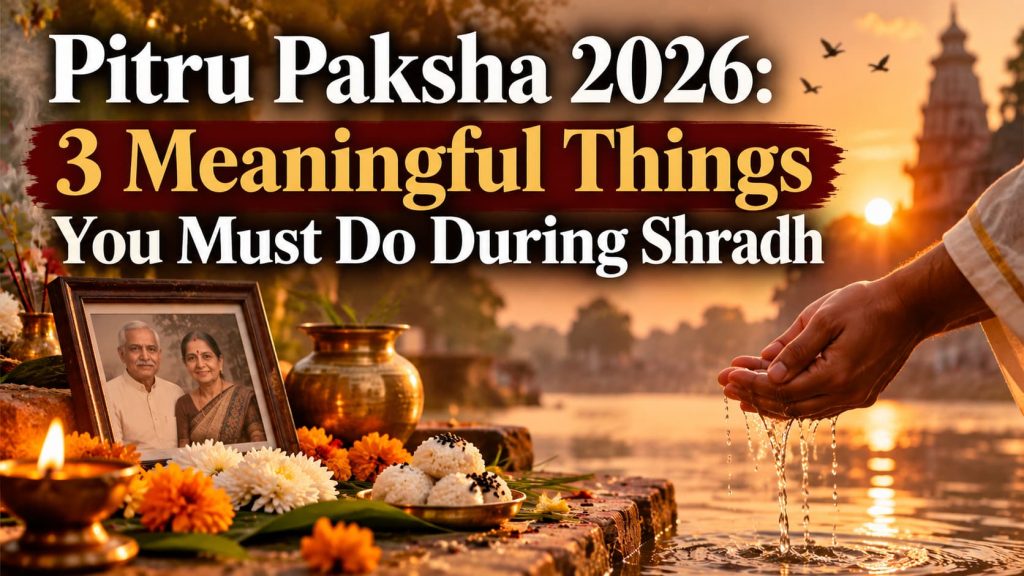
What Pitru Paksha really means, why we honour our ancestors, what you can do during these sacred days, and the common mistakes to avoid
Every year, around this time, my phone starts filling up with the same questions.
- What should we do during Pitru Paksha?
- What should we avoid?
- When exactly should Shradh be performed?
- Can we buy something new during these days?
And the one that touches me the most, what happens if we cannot perform the rituals the way our parents or grandparents did?
I understand why these questions come up. Pitru Paksha carries so many rules in popular imagination that people often approach it with a quiet kind of anxiety instead of the reverence it actually deserves.
But before we get into a long list of dos and don’ts, I believe it is far more important to understand what Pitru Paksha actually means. Once you understand the spirit behind it, the rules stop feeling like a burden and start feeling like an invitation.
So let us first understand Pitru Paksha itself, and then, before we close, let us talk about the seven common mistakes I see people making during Shradh every single year.
What Is Pitru Paksha?
In simple terms, Pitru refers to our ancestors, and Paksha means a fortnight, a period of about fifteen to sixteen days measured according to the lunar calendar. Put together, Pitru Paksha is the fortnight set aside for remembering our ancestors.
This is also the period during which Shraddha, often written as Shradh, is traditionally observed. Shraddha, in simple terms, refers to an act of remembrance and reverence performed for one’s ancestors. The word itself comes from “shraddha,” which means faith. So, at its heart, this is not a ritual performed out of duty alone. It is meant to be performed with genuine faith and love.
When Is Pitru Paksha 2026?
I always tell people, get the dates right first, everything else becomes easier after that.
| Important Date | 2026 |
| Purnima Shraddha | 26 September 2026 (Saturday) |
| Pitru Paksha begins with Pratipada Shraddha | 27 September 2026 (Sunday) |
| Sarva Pitru Amavasya | 10 October 2026 (Saturday) |
| Sharad Navratri begins | 11 October 2026 |
The main Pitru Paksha sequence, the Krishna Paksha or waning fortnight, runs from 27 September through 10 October 2026. Purnima Shraddha on 26 September is also observed in many households and calendars, which is why you will often see the whole period described as either fifteen or sixteen days. Both counts are correct, families simply follow their own tradition here.
If you know the exact tithi on which your ancestor passed away, Shradh is traditionally performed on the matching tithi during this fortnight. If the tithi is not known, or if a family wants to remember all their ancestors together, Sarva Pitru Amavasya on 10 October is traditionally considered an appropriate day for remembering ancestors collectively, particularly when the relevant death tithi is unknown.
Where This Tradition Actually Comes From
The roots are ancient
The practice of honouring ancestors has very ancient roots in Hindu tradition. Early texts refer to the Pitrs, or ancestors, and to offerings made in their honour. Over time, these ideas developed into the structured ancestral practices we know today.
- Ancient roots: Vedic literature contains references to the Pitrs and ancestral offerings.
- Later development: Dharmasutras and Puranic texts further developed traditions around Shraddha and ancestral rites.
- Pitru Rin: The tradition speaks of an ancestral debt, reminding us of our connection and gratitude towards those who came before us.
- Ancestral practices: Shraddha, Tarpan and Pind Daan became important ways of expressing remembrance and reverence.
Why is Pitru Paksha observed during this period?
Pitru Paksha falls during the waning phase of the lunar month and is traditionally considered an important period for remembering ancestors.
- The southern direction, Dakshina, is traditionally associated with Yama and the ancestral realm, Pitru Loka.
- The dates follow the Hindu lunar calendar, which is why they change every year.
- The period provides a dedicated time for remembrance, gratitude and ancestral rites.
What I find beautiful is that this tradition gives us a specific time to pause and remember where we came from. It reminds us that our lives are connected to generations that came before us.
With that foundation in place, let me now share the story most people already know, the story of Karna.
The Story of Karna and Pitru Paksha
There is a well-known traditional account connected with Pitru Paksha that I find genuinely moving, and it involves Karna from the Mahabharata.
According to this traditional story, Karna was known throughout his life for his extraordinary generosity. He gave away gold, wealth, and material comforts to anyone who asked. When he died and reached the afterlife, he was offered gold and jewels in return for his generosity. But according to the story, he found himself unable to receive nourishment there, because he had spent his life giving material wealth and had never offered anything to his own ancestors.
When he asked why this had happened, he was told that he had never performed Shraddha for his forefathers, since he did not know about his lineage for much of his life. He was then given a period of time, traditionally said to be a fortnight, to return to earth and offer Shraddha in honour of his ancestors. This fortnight, the story tells us, became what we now observe as Pitru Paksha.
It is important to remember that this is a popular traditional account associated with the significance of Pitru Paksha, and different texts and regional traditions explain the observance in different ways.
The story of Karna beautifully highlights the deeper message of the period: material generosity has its place, but remembering and honouring those who came before us is also an important part of our tradition.
What Do Shraddha, Tarpan and Pind Daan Mean?
These three words come up constantly during this period, and I find that once people understand them simply, the whole period feels far less confusing.
| Term | Simple Meaning |
| Shraddha / Shradh | The overall traditional observance performed with reverence for one’s ancestors |
| Tarpan | An offering, traditionally involving water, performed as an act of remembrance and reverence toward ancestors |
| Pind Daan | A specific traditional ancestral offering performed through prescribed rites, often at designated pilgrimage sites |
| Pitru Paksha | The larger fortnight during which Shraddha is observed |
I want to add here that the exact way these are performed can differ quite a lot depending on family tradition, regional custom, and the priest guiding the ritual. There is no single universal method, and that is completely fine.
Why Do We Honour Our Ancestors?
This is the question I actually find most meaningful, more than any specific ritual detail.
Gratitude. Somewhere along the line, someone in your family worked hard, made sacrifices, or simply survived difficult times so that you could exist today. Pitru Paksha gives us a structured moment to acknowledge that.
Remembrance. Stories fade quickly if nobody tells them. I often tell people that talking about a grandparent’s habits, their humour, or their struggles keeps them alive in a real, felt way.
Respect. Simply acknowledging that those who came before us mattered, regardless of how complicated the relationship may have been.
Reflection. Looking honestly at what you inherited, not only material things, but habits, beliefs, and ways of relating to the world.
Healing. Family patterns, the way we handle money, conflict, or love, often travel down generations. This period offers a natural pause to notice them.
Responsibility. Thinking about what you want to consciously pass on to the people who come after you.
In my experience, when people approach Pitru Paksha through these six lenses instead of through a checklist of restrictions, the whole period starts to feel much more personal and far less intimidating.
The Spiritual Significance of Pitru Paksha
When I look at this spiritually, Pitru Paksha is not really about looking backward with sadness. It is an opportunity to pause.
We inherit more than a family name. We also inherit stories, values, habits, patterns, and sometimes wounds. For me, remembering our ancestors is also an invitation to become more conscious of what we choose to carry forward.
This is where the period stops being about ritual alone and becomes something quietly transformative. You are not just honouring people who are no longer here. You are also asking yourself, what parts of this inheritance do I want to keep, and what parts am I ready to release?
How Is Pitru Paksha Traditionally Observed?
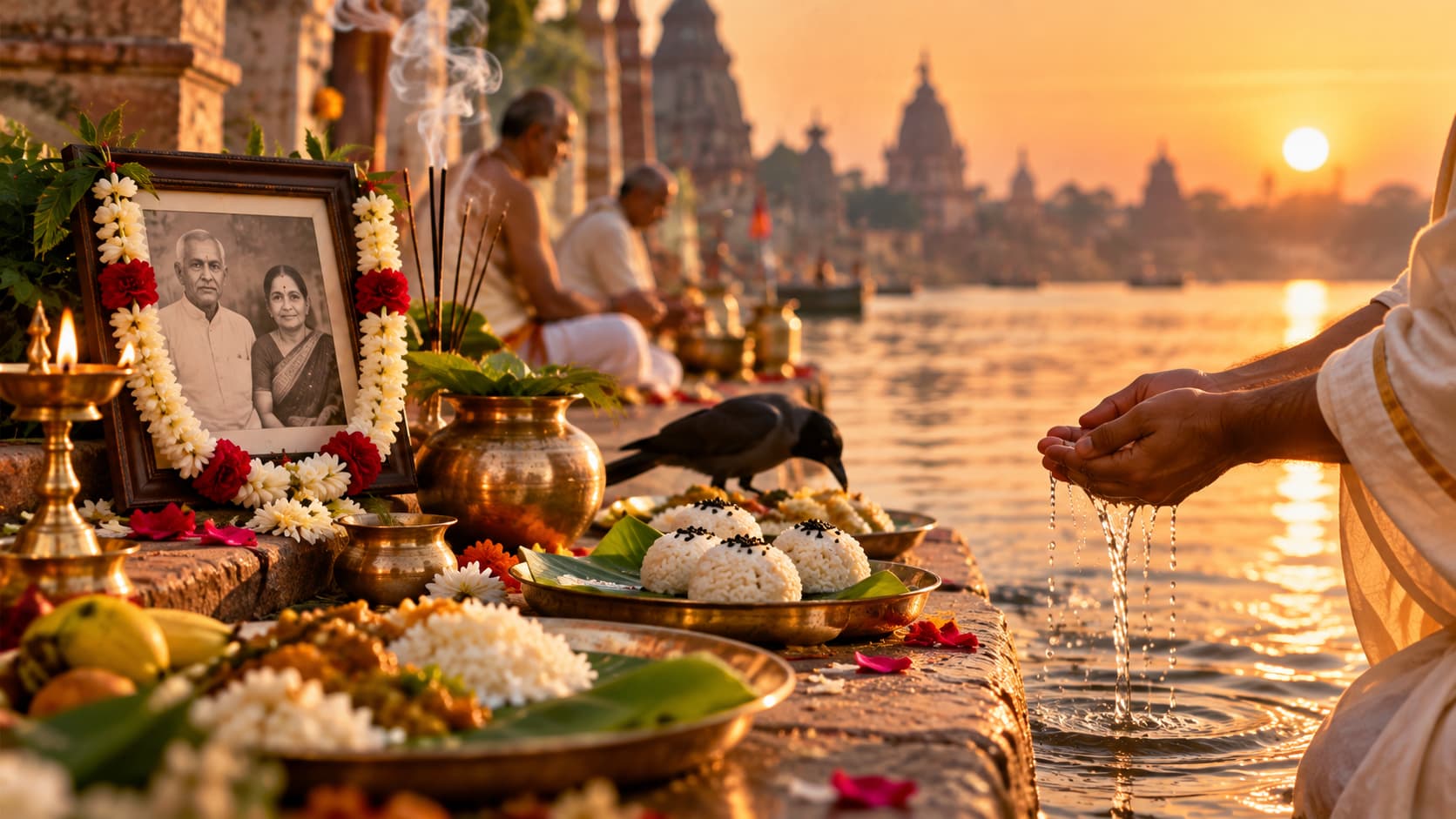
Without going into overly technical ritual detail, here is the general framework many families follow.
- Shraddha is performed according to the relevant death tithi of the ancestor
- Tarpan, the water offering, is performed as an act of remembrance
- Pind Daan is performed where the family tradition includes it, often at pilgrimage sites
- Food is prepared and offered, often to Brahmins, to crows, or to those in need
- Feeding others and practicing charity in the ancestor’s memory
- Prayer and quiet remembrance
- Acts of service performed consciously in the ancestor’s name
Sarva Pitru Amavasya, the final day of the fortnight, holds a special place because it is considered suitable for remembering all ancestors together, especially when a specific death tithi is not known.
How to Approach Pitru Paksha With Intention
I often tell my students that Pitru Paksha does not require perfection. It requires presence.
This period can be an opportunity to slow down, remember where we come from, and become more conscious of what we carry forward.
1. Remember With Love, Not Fear
Take a moment to remember the people who came before you. Think about their lives, their struggles, their qualities, and the memories that still make you smile.
Instead of approaching this period with fear about what might go wrong, approach it with gratitude for what has been passed down to you.
2. Reflect on What You Have Inherited
Our inheritance is not limited to property or possessions. We also inherit values, habits, beliefs, family stories and sometimes patterns that continue across generations.
Use this period to ask yourself:
- What qualities from my family do I want to carry forward?
- What values have shaped who I am?
- Is there a pattern I consciously want to change?
This kind of reflection can make ancestral remembrance deeply personal.
3. Let Their Best Qualities Live Through You
One beautiful way of honouring someone is to embody the qualities you admired in them.
If your grandmother was generous, practise generosity. If your father valued honesty, bring more honesty into your own life. & If someone in your family was known for helping others, find your own way to serve.
In this way, remembrance becomes something you live, not just something you perform.
4. Make Space for Prayer and Quiet Reflection
You can spend a few quiet minutes in prayer, meditation or simple silence. There is no need for complicated words.
Sometimes, simply sitting peacefully and remembering your ancestors with love can create a meaningful moment of connection.
5. Choose Peace Where You Can
Family histories are not always simple. Some relationships may have carried pain, distance or unresolved emotions.
Pitru Paksha can also become a gentle reminder to release what you no longer wish to carry. Forgiveness does not mean forgetting or excusing what happened. Sometimes, it simply means choosing not to let old pain control your present.
For me, this is the deeper spiritual side of Pitru Paksha. It is not only about honouring those who came before us. It is also about becoming more conscious of what we carry forward into the generations that come after us.
3 Meaningful Things You Can Do During Pitru Paksha
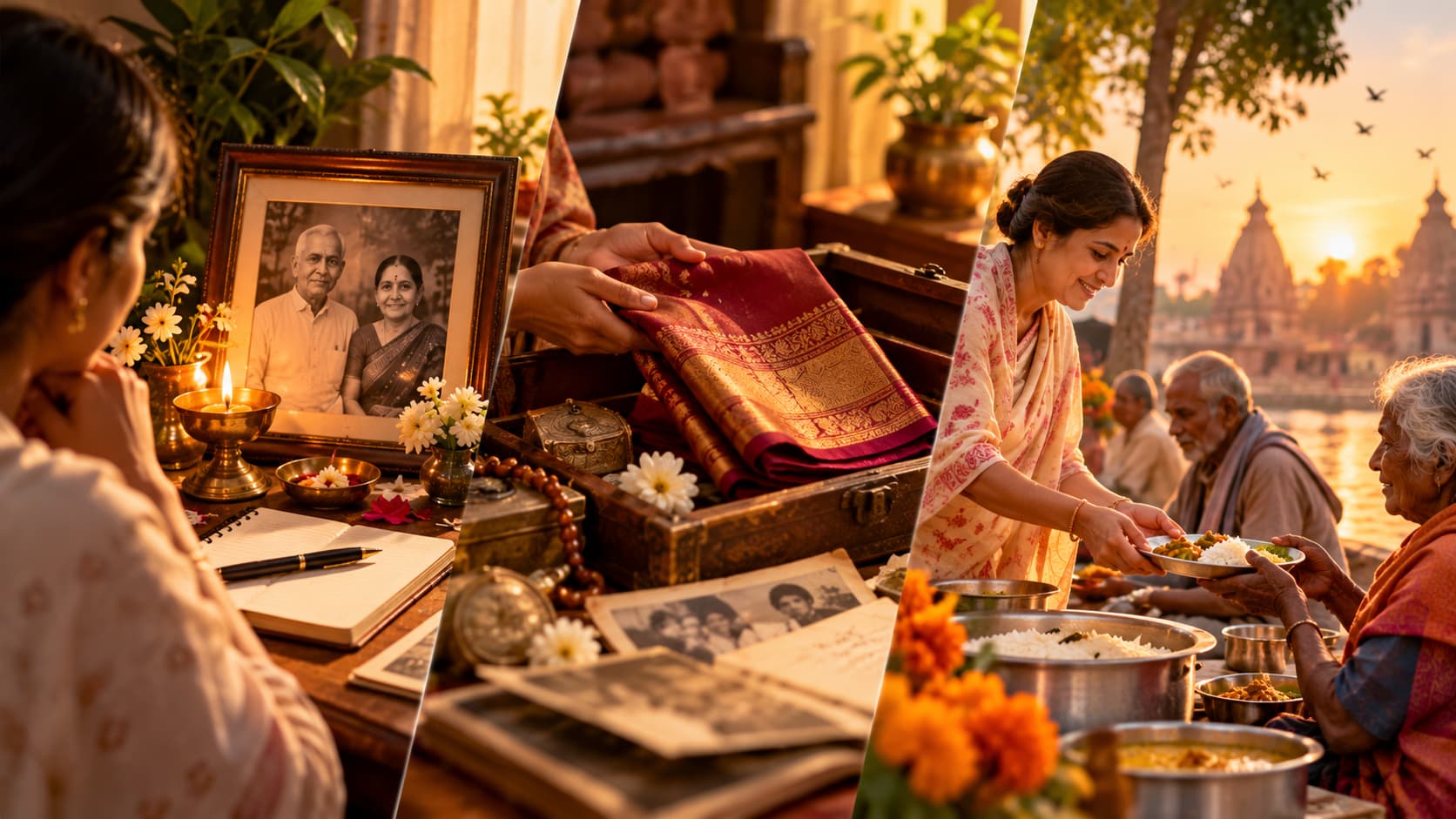
Once you understand the spirit behind Pitru Paksha, you can bring that intention into simple everyday actions. You do not need to make these practices elaborate. Choose whatever feels natural and meaningful to you.
1. Create a Moment of Personal Remembrance
If you have a photograph of your ancestor, take it out. You can revisit an old family album, keep their photograph beside you, or simply close your eyes and visualise them.
Spend a few quiet moments remembering them and thinking about what you are grateful for.
You can also write your thoughts down.
Try this journaling prompt:
“I am grateful to my ancestors for…”
You can continue with whatever comes naturally:
- Something they taught you
- A quality you received from them
- A memory you still treasure
- Something they made possible for your family
If you do not have a photograph, don’t worry. Your memory is enough.
2. Reconnect With Something That Carries Their Memory
Sometimes an ordinary object can hold an extraordinary memory.
Perhaps you still have a saree, piece of clothing, book, piece of jewellery, utensil, letter, photograph or another item that belonged to them or was gifted by them.
Take it out. Look at it. Use it if appropriate. Let it take you back to a memory.
You can ask yourself:
- What does this object remind me of?
- What memory of this person comes alive when I see it?
- What quality of theirs would I like to keep alive in my own life?
The object is not the important part. The memory and gratitude connected to it are.
3. Share Something in Their Memory
Food can carry some of our strongest family memories.
If you remember a dish your ancestor loved, you can prepare it and share it with your family. You can also share a meal with someone in need, donate food, or feed someone in their memory.
As you do it, simply hold the thought:
“I am doing this with gratitude and in loving remembrance of you.”
This allows remembrance to move beyond thought and become an act of kindness.
You Don’t Have to Do Everything
You can choose one of these practices, or combine all three. There is no need to make them elaborate.
What matters most is the intention behind them: remembering with love, expressing gratitude, and keeping meaningful values alive.
7 Common Mistakes People Make During Shradh
Now that we understand what Pitru Paksha is really about, let us come to the seven mistakes I see people making during Shradh, year after year.
Mistake 1: Observing Pitru Paksha Only Out of Fear
I have met so many people who follow every rule during this period purely out of fear that something bad will happen otherwise. In my experience, fear-based observance drains the meaning out of the practice. Pitru Paksha was never meant to frighten us into compliance. It was meant to bring us closer to gratitude and reflection. When fear becomes the main motivation, the deeper purpose gets lost entirely.
Mistake 2: Following Every Rule You See on Social Media
Every year, social media fills up with long lists of things you must never do during Pitru Paksha, many of them presented as universal law. What I personally believe is that a lot of these are regional or family-specific customs, not rules that apply identically to everyone. Before adopting a rule you saw online, it is worth checking what your own family tradition actually says.
Mistake 3: Ignoring the Relevant Tithi
Traditional Shraddha is meant to be performed according to the specific lunar tithi connected to the ancestor’s passing, not simply on any convenient day within the fortnight. Ignoring the tithi and treating the entire period casually takes away from the precision that this tradition was built around.
Mistake 4: Performing Rituals Without Understanding Their Meaning
I often see people going through the motions of a ritual mechanically, without any real sense of what it represents. Over the years, I have noticed that the intention and the reverence behind an act matter far more than performing it perfectly on the surface.
Mistake 5: Forgetting Charity, Food and Acts of Kindness
Somewhere along the way, many people have reduced Pitru Paksha to a list of restrictions, forgetting that generosity has always been at the heart of this tradition. Feeding someone, donating, or performing an act of kindness in your ancestor’s name is not a side detail. It is one of the central acts of remembrance.
Mistake 6: Thinking You Have Failed Spiritually If You Cannot Perform Elaborate Rituals
This one touches me personally, because I hear it so often. People living away from their hometown, settled abroad, unfamiliar with the exact procedure, or without access to a priest, often feel they have failed their ancestors. I would encourage you to release that guilt completely. A sincere prayer, a quiet moment of remembrance, or an act of kindness performed with genuine feeling holds real spiritual meaning, even without an elaborate ceremony.
Mistake 7: Remembering the Departed While Forgetting the Living
This is, for me, the most important mistake of all. If remembering our ancestors is meant to teach us gratitude, compassion, and family values, then those same qualities should show up in how we treat the people who are still with us today. I have seen families argue bitterly during Pitru Paksha over ritual details while the elders sitting right in front of them feel unseen and unheard. Honouring the departed should never come at the cost of neglecting the living.
What Should We Avoid During Pitru Paksha?
| Traditional Practice / Concern | How to Approach It |
| Food restrictions | Follow your own family or regional tradition rather than a generic rule |
| Major rituals | Understand what your family actually follows before adopting a rule from social media |
| Buying new things | Customs differ widely here, treat this as a family preference, not a universal prohibition |
| Arguments and negativity | Use this period for reflection and harmony within the family |
| Fear-based practices | Shift the focus from fear to gratitude and remembrance |
What If I Cannot Perform Shraddha Rituals?
I want to speak directly to those of you who feel a quiet sense of guilt around this question.
Perhaps you do not know your ancestor’s exact death tithi. Perhaps you live far from your hometown, or outside India altogether. & Perhaps you cannot travel to Gaya or another pilgrimage site, do not have access to a priest, or simply follow a different family tradition.
None of this makes your remembrance any less valid.
A sincere prayer said quietly at home, a donation made in your ancestor’s memory, a meal shared with someone in need, or simply setting aside ten minutes to remember them with love, these can hold real personal meaning.
I am not saying these replace every element of a traditional ritual performed with full ceremony. What I am saying is that remembrance, gratitude, and kindness are always within your reach, regardless of your circumstances.
Final Reflection
Pitru Paksha is not only about looking backward. It is also about deciding what kind of future we want to create.
We remember those who came before us. We understand what they gave us. & We acknowledge what may have been difficult. & We choose what to carry forward. And we consciously create a healthier legacy for those who will come after us.
When we honour where we came from, we become more conscious of where we are going.
If this reflection resonated with you, and you would like to go deeper into healing inherited family patterns and building conscious spiritual practices, I would invite you to explore the resources and courses available at drneetikaushik.com.
Frequently Asked Questions
Q1. What is Pitru Paksha?
Ans. Pitru Paksha is a fortnight in the Hindu lunar calendar dedicated to remembering and honouring one’s ancestors through Shraddha rituals.
Q2. When does the main Pitru Paksha observance start in 2026?”When does Pitru Paksha end in 2026?
Ans. Pitru Paksha 2026 ends on 10 October 2026 with Sarva Pitru Amavasya.
Q3. What is the difference between Pitru Paksha and Shradh?
Ans. Pitru Paksha is the entire fortnight, while Shraddha or Shradh refers to the specific act of remembrance performed for ancestors during this period.
Q4. What is Tarpan during Pitru Paksha?
Ans. Tarpan is a traditional water offering made as an act of remembrance and reverence toward one’s ancestors.
Q5. What is Pind Daan?
Ans. Pind Daan is a specific ancestral offering performed through prescribed rites, often at pilgrimage sites such as Gaya.
Q6. Why is Gaya important during Pitru Paksha?
Ans. Gaya in Bihar is traditionally considered one of the most significant pilgrimage centres for performing Pind Daan and ancestral rites.
Q7. What should we do during Pitru Paksha?
Ans. Remember your ancestors, express gratitude, perform charity, pray or meditate, and reflect on family patterns you wish to heal or continue.
Q8. What should we avoid during Pitru Paksha?
Ans. Follow your own family’s tradition around food and rituals, avoid conflict, and shift away from fear-based observance toward gratitude.
Q9. What is Sarva Pitru Amavasya?
Ans. It is the final day of Pitru Paksha, considered suitable for remembering all ancestors together, especially when the specific death tithi is unknown.
Q10. Can I observe Pitru Paksha if I cannot perform traditional Shradh rituals?
Ans. Yes. Sincere prayer, remembrance, charity, and acts of kindness performed with genuine feeling hold real personal and spiritual meaning, even without elaborate rituals.