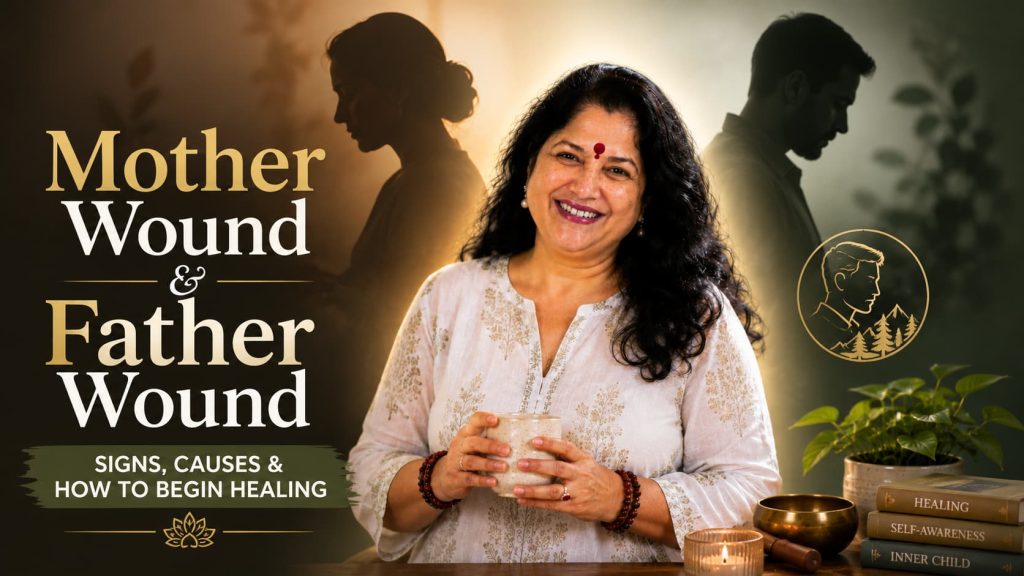
| Quick Answer: What are Mother Wound and Father Wound? “Mother Wound” and “Father Wound” are terms used in therapeutic, self-help, and spiritual circles to describe emotional patterns that may develop from difficult, inconsistent, unavailable, critical, or otherwise painful experiences with a parent. These patterns can influence self-worth, relationships, boundaries, and emotional responses well into adulthood — even when we don’t consciously connect the dots. |
- Why do I always need someone’s approval before I feel okay about myself?
- Why does a part of me whisper that I am still not enough, no matter what I achieve?
- Why do I keep choosing people who cannot love me the way I need?
- Why do I feel guilty for simply resting, or simply being myself?
Friends, in my thirty-five years of walking beside people through astrology, healing, and self-discovery, I have heard some version of these questions more times than I can count. And I have learned that the answer often lies not only in the stars — it lies further back, in our childhood, in our very first relationships: our mother and our father.
This is not an article about blaming your parents. Most parents give what they themselves received, and many were carrying their own unhealed wounds long before we arrived. This is an article about awareness – because you cannot heal what you refuse to look at, and you cannot rewrite a pattern you have never named. My hope is that by the end of this piece, you will understand yourself a little more gently, and perhaps take your first real step toward healing.
What Is a Mother Wound?
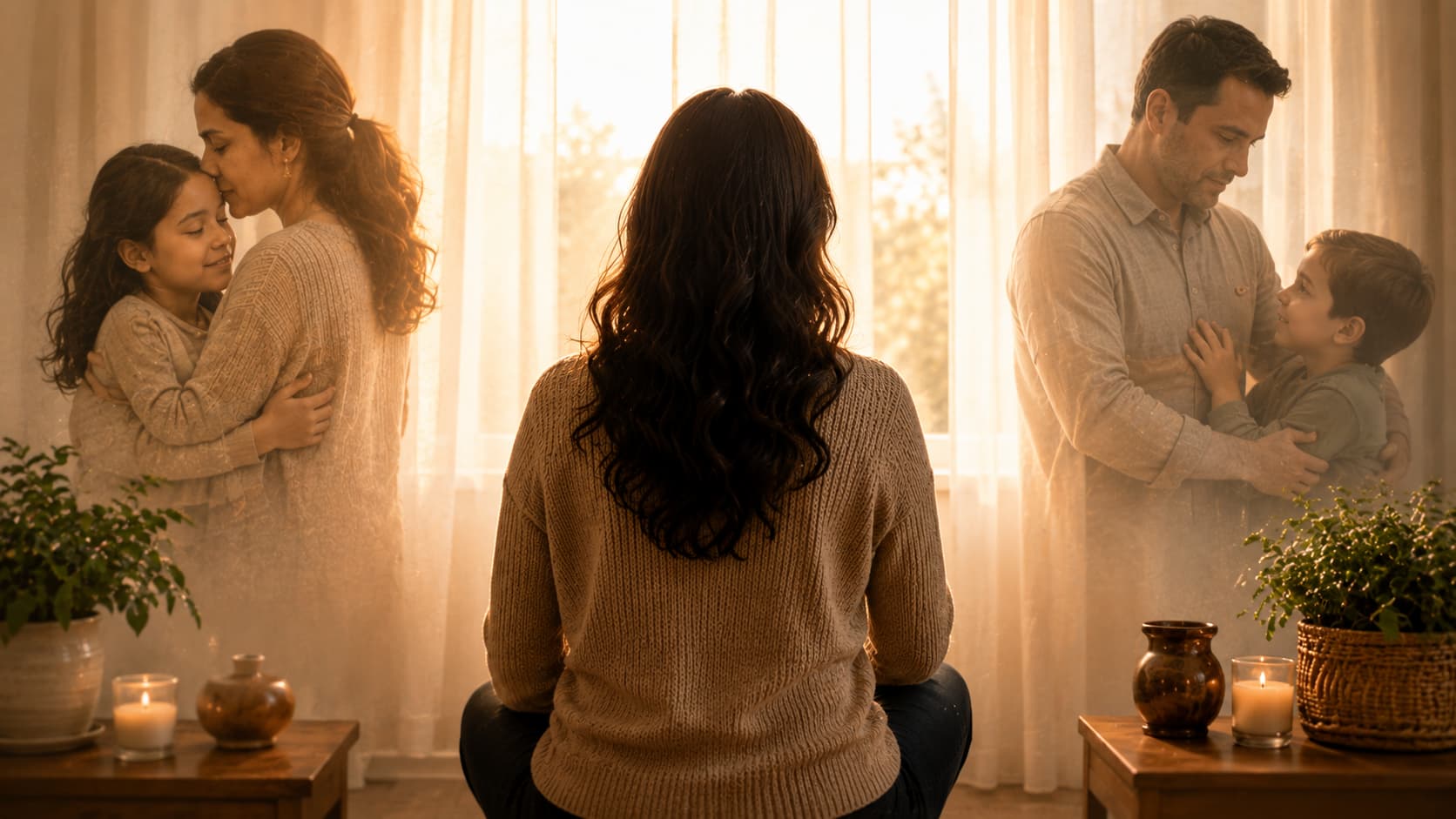
Your mother — or whoever mothered you — is usually the very first relationship you know. Even before birth, many of us feel that heartbeat as our first sense of home. In psychological and self-help conversations, the mother is often associated with nurturing, safety, belonging, and our earliest sense of worthiness.
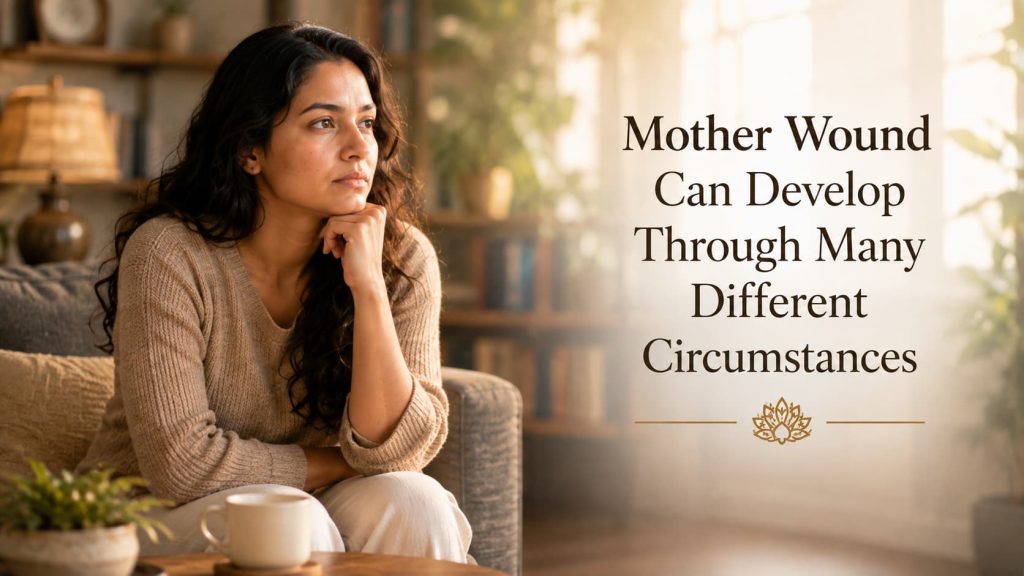
A Mother Wound is a term commonly used to describe the emotional pattern that may form when this early bond feels broken, inconsistent, or incomplete — for any reason. It is important to say clearly: this does not automatically mean you had a “bad mother.” A Mother Wound can develop through many different circumstances, including:
- A mother who was physically present but emotionally unavailable
- A mother who was critical or perfectionistic, and hard to please
- A mother who was overprotective, never allowing you to feel your own strength
- A mother who was struggling herself — with depression, anxiety, or her own unresolved pain — and unknowingly passed some of it on
- A mother who compared you often to siblings or other children
- In rarer but real cases, a mother who was absent, neglectful, or abusive
7 Signs You May Be Carrying a Mother Wound
Ask yourself these questions honestly and gently. Noticing yourself in a few of them does not prove anything — but it may be worth reflecting on.
- Never feeling “enough.” No matter what you achieve, something inside still feels incomplete.
- A harsh inner critic. A constant inner voice that tells you that you are wrong, or not good enough.
- Difficulty setting boundaries — especially with women in your life, such as mothers, mothers-in-law, or close friends.
- Chronic people-pleasing. Saying yes when you want to say no, just to avoid conflict.
- Unexplained guilt for resting, for wanting more, or simply for being yourself.
- Difficulty nurturing yourself. Self-care can feel indulgent or even selfish.
- Anxious or avoidant patterns in relationships — either clinging tightly to love, or pushing it away before it can hurt you.
How a Mother Wound May Show Up in Adult Life
These are possibilities to reflect on, not a diagnosis.
| Area of Life | Possible Pattern |
| Relationships | Being drawn to partners who recreate familiar emotional dynamics from childhood |
| Career | Playing small, or feeling unsafe being visible and seen |
| Boundaries | Difficulty saying no, even when it costs your peace |
| Self-care | Feeling guilty for prioritising rest or your own needs |
| Parenting | Unconsciously repeating — or consciously working to break — inherited patterns |
What Is a Father Wound?
If the mother is often linked to our inner world of safety and belonging, the father — or father figure — is often associated with how we meet the outer world: our confidence, our sense of purpose, and our identity. At his best, a father helps a child feel, “You are capable. You are worthy. You can go out and meet the world.”
When this affirmation is missing or inconsistent, what is commonly called a Father Wound may begin to form. This can develop through experiences such as:
- A father who was physically absent — due to work, separation, or loss
- A father who was emotionally distant, present in the house but rarely truly there
- A father who was harshly critical or difficult to satisfy
- A father who expressed love through control or fear rather than warmth
- A father whose own struggles — anger, addiction, or instability — made home feel unsafe
- A father who rarely, if ever, said, “I am proud of you”
7 Signs You May Be Carrying a Father Wound
- Low self-confidence, and a quiet feeling that you don’t deserve success.
- Chronic perfectionism — always trying to prove yourself, rarely feeling it’s enough.
- Discomfort with authority figures — bosses or mentors may trigger anxiety, rebellion, or over-compliance.
- A fear of failure so strong that it can stop you from even trying.
- Difficulty trusting in relationships, or a pull toward emotionally unavailable partners.
- A deep hunger to be seen, recognised, and validated.
- Swinging between wanting to be like your father — and desperately not wanting to be like him.
Mother Wound vs Father Wound: A Quick Comparison
These categories are not rigid psychological rules, and many people carry both wounds in different measures. The table below simply offers a lens for reflection.
| Mother Wound — Often Linked To | Father Wound — Often Linked To |
| Self-nurturing | Confidence |
| Emotional safety | Validation |
| Sense of belonging | Recognition |
| Self-worth | A sense of achievement |
| Boundaries | Relationship with authority |
| Emotional connection | Trust |
How Childhood Patterns Can Follow Us Into Adulthood
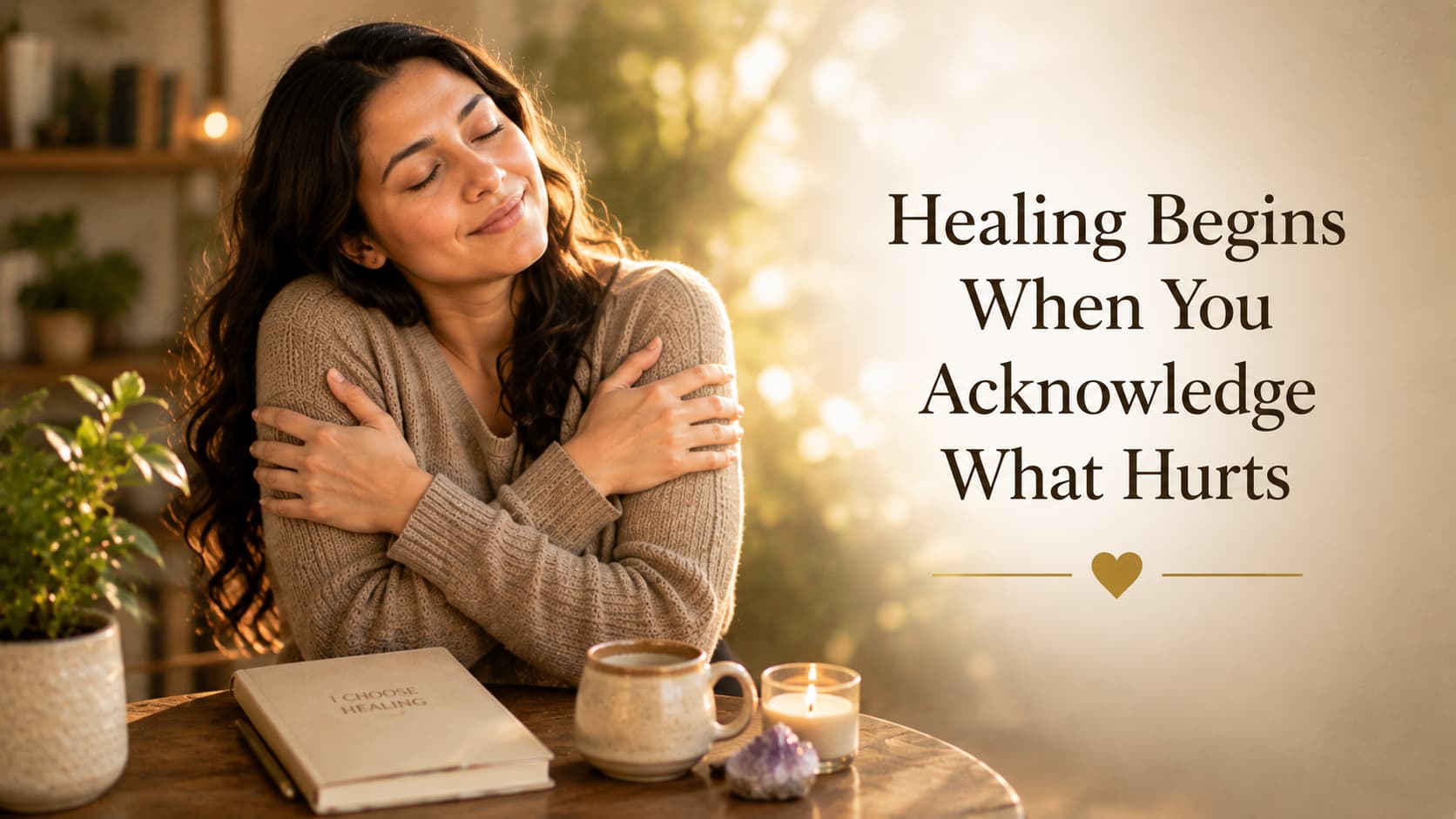
Many of these early experiences settle into the body and the nervous system, particularly from our earliest years, almost like survival programs. When something triggers an old wound, we can sometimes react less like our adult self and more like the child who once needed protection.
Over time, this can quietly shape our beliefs — “I must earn love,” “I am too much,” “I am not enough” — and our patterns, including people-pleasing, procrastination, overworking, emotional shutdown, or self-sabotage. These are not truths about who you are; they are adaptations a child once created to feel safe.
It is also worth saying plainly: not every adult struggle traces back to childhood, and this framework is a lens for reflection, not a rule that explains everything about a person.
Can You Have Both a Mother Wound and a Father Wound?
Yes. Many people carry elements of both, and family dynamics are rarely simple enough to fit into a single label. If both parents struggled to meet your emotional needs in different ways, it is natural that both relationships left an imprint. This does not make your story more broken — it simply means there may be two directions worth exploring on your healing path.
How to Begin Healing
Healing does not mean pretending the past didn’t happen. It means the past no longer gets to run your present. Here is a gentle framework to begin.
Step 1 — Awareness: Name the Wound
What is not named is difficult to heal. Sit quietly with your childhood, without judgment, and notice what comes up. Try completing the sentence: “My mother made me feel ___” or “My father never ___.” This is not blame — it is simply acknowledgment.
Step 2 — Inner Child Work
Picture yourself as a six- or seven-year-old. What did that child need to hear? Now, gently offer it: “I am here. You are safe. You are enough. & You are loved.” Practiced regularly, this can be a meaningful part of reconnecting with yourself.
Step 3 — Journaling
Write letters you never have to send — to your mother, to your father — including the love, the hurt, and the longing. Then try writing a reply, imagining what a healed version of them might have said. Many people find this creates real emotional relief.
Step 4 — Forgiveness
Forgiveness does not mean saying that painful or harmful behaviour was acceptable. It means choosing to stop carrying that pain as your identity. Your parents could generally only give what they themselves had received.
Step 5 — Reparenting Yourself
This means becoming the parent your inner child needed. Offer yourself the nurturing a Mother Wound may have denied you — rest, compassion, self-care — and the affirmation a Father Wound may have denied you — encouragement, celebration of your wins, and confident boundaries.
Step 6 — Crystal & Energy Healing Support
In my own practice, I have always found certain crystals to be gentle companions for this inner work — supportive tools within a spiritual tradition, not medical treatments. A few I often recommend:
| Crystal | Traditional Association | How to Use |
| Rose Quartz | Self-love and compassion | Hold during meditation or journaling |
| Black Tourmaline | Grounding and protection | Keep nearby during the day |
| Amethyst | Calm and clarity | Use during meditation |
| Rhodonite | Emotional healing | Hold while journaling |
| Rhodochrosite | Inner-child and emotional healing | Keep near your meditation space |
Step 7 — Seek Support
Healing deep wounds is brave work, and you don’t have to do it alone. Alongside any spiritual practice, consider working with a qualified mental-health professional — approaches such as EMDR, somatic therapy, or inner-child-focused therapy can offer valuable, evidence-informed support. Spiritual practices can complement this work beautifully, but they are not a substitute for professional care when it is needed.
A Structured Path: Shadow Journaling for Inner Child Healing
If you would like a more structured way to explore these patterns, my course, Heal Your Inner Child Through Shadow Journaling, offers guided journaling practices designed to help you gently uncover childhood patterns, emotional triggers, and unmet needs at your own pace.
Ho’oponopono as a Reflective Practice
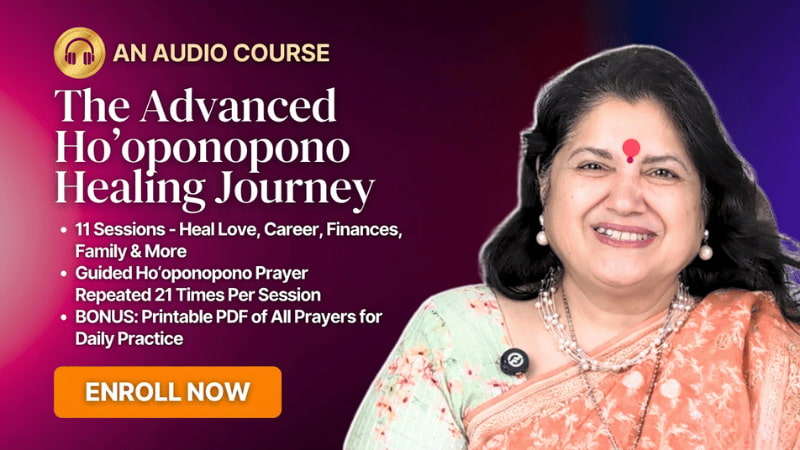
Ho’oponopono is a traditional Hawaiian practice of reconciliation and forgiveness, built around the phrases “I’m sorry, please forgive me, thank you, I love you.” Many people use it as a spiritual practice for releasing resentment and finding inner peace — it is a tradition of reflection and prayer, not a clinically proven treatment for trauma. For those who resonate with prayer-based spiritual practices, my Advanced Ho’oponopono Prayer Course offers a deeper exploration of this tradition.
Important: Healing Does Not Mean Blaming Your Parents
I want to leave you with something I consider central to this entire journey. Your parents likely carried their own unspoken wounds, inherited from their parents before them. Understanding their limitations does not mean denying your own pain — you are allowed to hold two truths at once:
| “What happened affected me.” and “I choose not to let it define my future.” |
Frequently Asked Questions
Q1. What is a Mother Wound?
A Mother Wound is a term used to describe emotional patterns that may develop when the early bond with a mother or mother figure feels inconsistent, unavailable, critical, or otherwise unmet. It is not a formal medical diagnosis, but it is widely used in therapeutic and self-help conversations to describe attachment-related patterns that can affect self-worth, boundaries, and relationships in adulthood.
Q2. What is a Father Wound?
A Father Wound describes emotional patterns that may form when a father or father figure was absent, distant, harsh, or unaffirming during childhood. It is commonly linked to struggles with confidence, validation, trust, and one’s relationship with authority in adult life.
Q3. What are the signs of a Mother Wound?
Common signs people describe include feeling like you’re never enough, a harsh inner critic, difficulty setting boundaries, chronic people-pleasing, guilt around rest or self-care, and anxious or avoidant patterns in relationships. These are reflection points, not a diagnosis.
Q4. What are the signs of a Father Wound?
Commonly described signs include low self-confidence, chronic perfectionism, discomfort with authority, fear of failure, difficulty trusting others, and a strong need for external validation or recognition.
Q5. Can you have both a Mother Wound and a Father Wound?
Yes. It is common for people to carry patterns connected to both parental relationships at once, since family dynamics are complex and rarely fit neatly into a single category.
Q6. How do you begin healing childhood emotional wounds?
A gentle starting framework includes building awareness, connecting with your inner child, journaling your feelings, practising forgiveness, reparenting yourself with compassion, and seeking support from a qualified mental-health professional when needed.
Q7. What crystals are traditionally used for inner-child healing?
Within crystal-healing traditions, stones such as Rose Quartz, Black Tourmaline, Amethyst, Rhodonite, and Rhodochrosite are commonly associated with self-love, grounding, calm, and emotional healing. These are spiritual tools, not medical treatments.
Q8. Can journaling help with childhood emotional patterns?
Many people find that journaling — including writing unsent letters to parents — helps them process buried emotions, build self-awareness, and create a sense of compassion and completion around difficult experiences.
Final Reflection
If you recognised yourself in these pages, please hear this: your wounds are not your destiny. You are not broken. Somewhere beneath every fear, every pattern of self-doubt, every difficult relationship, there is a younger version of you who simply needed to be seen, held, and told, “You are enough.”
Awareness is the first act of healing. You may be the first person in your family to consciously choose this path — and that choice, however small it feels today, matters. Healing does not erase the past. It changes the relationship you have with it.
Continue Your Healing Journey
Want to explore your inner child? Discover Heal Your Inner Child Through Shadow Journaling.
Want to explore forgiveness and prayer? Explore the Advanced Ho’oponopono Prayer Course.
Want to incorporate crystal practices? Explore authentic crystals traditionally used for self-love, emotional healing, grounding, and inner-child reflection.