5 Signs You Are Trying to Manifest Someone Else’s Dream
What if the dream you are chasing isn’t actually yours?
Over the last seven years, I have sat with thousands of people who came to me wanting to manifest a better life. They wanted the successful career, the beautiful home, the perfect relationship, the financial abundance, the recognition, the travel, a certain kind of lifestyle.
And yet, when I asked them one simple question, many of them went quiet.
“But is this what you actually want?”
That one question has changed more lives in my practice than any ritual, any mantra, or any crystal ever could.
We often assume that manifestation begins the moment we decide what we want. In my experience, the real work begins one step earlier, with a much harder question.
Where did this desire actually come from?
Did it rise up from your own heart? Or did it quietly enter you through your parents, your society, your comparisons, your social media feed, your fears, your childhood conditioning, your need for approval, or your need to prove yourself to someone who once doubted you?
I have learned, through years of guiding people through their manifestation journeys, that this is the real starting point. Manifestation should never be about creating a life that looks successful from the outside but feels completely disconnected on the inside. I have seen too many people reach the very goal they worked years for, only to feel strangely hollow standing inside it.
So, before we talk about how to manifest, I want to walk you through something more important. I want to help you recognise when the dream you are chasing was never fully yours to begin with.
What Does It Mean to Manifest Someone Else’s Dream?
This does not always mean that another person literally sat you down and told you what to want. It is rarely that obvious. Most of the time, someone else’s dream enters your mind so gradually that you begin to believe it was always yours.
- Perhaps your parents always wanted you to become a doctor or an engineer.
- Perhaps your friends believe that success only means a high paying corporate job.
- Perhaps your social media feed has convinced you that success looks like luxury travel and an expensive home.
- Perhaps your community has quietly told you that by a certain age, you should be married, settled, and secure.
You see someone else’s life and a thought arises within you, “I want that too.”
But if you pause and go a little deeper, what you may actually be longing for is freedom, security, creativity, love, recognition, peace, or a sense of belonging. The object changes depending on who you are watching. The underlying need usually stays the same.
This distinction, between the object of desire and the feeling behind it, is the foundation of everything I want to share with you in this article.
5 Signs You Are Trying to Manifest Someone Else’s Dream
Let me walk you through the five signs I have seen most often, in my clients and honestly, in my own life as well. As you read each one, ask yourself the reflection question with complete honesty. Nobody is reading your answer except you.
1. You Want It Because It Looks Successful, Not Because It Feels Right
This is usually the first and strongest sign.
Very often, we do not actually desire the thing itself. We desire the feeling we believe that thing will give us.
- When you say, “I want a big house,” what you may really want is security.
- When you say, “I want a senior position,” what you may really want is recognition.
- When you say, “I want thousands of followers,” what you may really want is to feel seen.
- When you say, “I want a perfect relationship,” what you may really want is emotional safety.
The house, the title, the followers, and the relationship are simply the containers we have been taught to pour our real needs into. Society hands us these containers and tells us they will make us feel whole. Sometimes they do. Often, they do not, because the container was never the actual need.
Ask yourself: “If nobody ever knew that I achieved this, would I still want it?”
If the honest answer is no, that goal may be borrowed rather than born from within you.
2. Your Dream Changes Whenever You Compare Yourself to Someone Else
This sign shows up more today than at any point in my thirty five years of experience, largely because of how much of other people’s lives we now see every single day.
- A friend gets promoted, and suddenly your own career feels small.
- Someone buys a house, and your rented apartment suddenly feels inadequate.
- A wedding is announced, and your relationship status starts to weigh on you.
- Someone’s business takes off, and your own steady, quiet path suddenly feels like failure.
- You see someone’s holiday photos, someone’s toned body, someone’s glowing life, and your own life, which felt perfectly fine yesterday, suddenly feels not enough today.
Inspiration expands you. Comparison makes you feel behind.
Here is what this often looks like in real life.
- You wanted to become a writer. Then you saw someone earning well through their business, and suddenly you wanted a business too.
- Then someone became well known online, and now visibility became your goal.
- Then someone became wealthy, and now money became the only thing you could think about.
You were not necessarily changing your dream because you grew or evolved. You may simply have been changing your dream according to whoever you were looking at that week.
2. You Feel More Pressure Than Excitement When You Think About Your Goal
This is one of the most reliable signs I have come to trust.
A genuine goal is not always easy. Real goals can be difficult, even frightening at times. But underneath that difficulty, there is usually some thread of curiosity, excitement, meaning, or a quiet inner pull that keeps drawing you forward.
A borrowed dream, on the other hand, tends to sound like this inside your head: “I should earn more.” “I should get married.” “I should become successful by now.” “I should have a bigger house.” “I should be further ahead in life.”
Notice how different these two sentences feel in your body:
“I want this.”
“I should want this.”
The first one has warmth in it. The second one has weight. If your goal is dragging you forward like a duty rather than pulling you forward like a longing, it may be worth asking whose voice is actually speaking that “should.”
4. You Are More Focused on Proving Something Than Experiencing It
This is where the work becomes a little deeper and more honest.
Sometimes the dream is not really about the dream at all. It is about proving something.
- “I am successful.”
- “I am better than they thought I would be.”
- “My parents can finally be proud of me.”
- “The people who underestimated me will see my worth now.”
- “I have finally made it, and everyone will know.”
There is nothing wrong with wanting success, recognition, or achievement. I have wanted all of these things myself, at different points in my own journey. But if the primary emotional fuel behind your goal is proving your worth to someone else, even to someone who is no longer in your life, achieving that goal may not give you the peace you imagined it would.
“If I no longer needed to prove anything to anyone, what would I choose?”
Sit with that question for longer than feels comfortable. The answer that arrives after the discomfort is usually the truer one.
5. You Achieve Things and Still Feel Surprisingly Empty
This is the sign that brings people to me most often, and it is usually the most painful one to sit with.
“I got what I wanted. So why do I still not feel happy?”
I have heard this from people who got the job, the promotion, the house, the relationship, or the recognition they had chased for years. And yet, something still feels quietly missing.
I want to be gentle here, because this does not automatically mean the achievement itself was wrong or a mistake. Sometimes it simply reveals that the achievement was never your deepest desire in the first place. It was a stand in for something else, something the mind had substituted for the real need.
I find this table helps my clients see the pattern clearly, so let me share it with you here.
| What I Thought I Wanted | What I May Actually Have Wanted |
| More money | Security and freedom |
| A prestigious career | Recognition and purpose |
| A relationship | Love and emotional safety |
| A bigger house | Stability and belonging |
| More followers | To feel seen and valued |
| Success | Freedom to live on my own terms |
If you look at your own life honestly, you may find your own name for something in the left column, and a completely different truth waiting for you in the right one.
How Do You Know What You Actually Want?
Now that we have named these signs, I do not want to leave you here feeling that everything you have ever wanted was somehow wrong or borrowed. That is not the point of this article at all. The point is to help you get closer to the truth underneath your goals, so that your manifestation practice becomes far more powerful.
Here is a simple exercise I often use with my own clients. I call it the “Why Do I Want This?” exercise.
Take one goal you are currently working towards. Let us say, for example, “I want to earn five lakh rupees a month.”
Now ask yourself, why?
Because I want financial freedom.
Why do I want financial freedom?
Because I do not want to worry about money anymore.
Why is that so important to you?
Because I want to feel safe.
And what would that safety actually allow you to do?
To travel without guilt, to spend real time with my family, to create freely without fear, to help the people I love.
Do you see what just happened? The real desire underneath that goal was probably never the number five lakh. It was freedom, security, and choice. Once you know this, your manifestation goal becomes so much clearer, and so much more aligned with who you truly are.
A Simple 5 Question Check Before You Manifest Anything
Before you write your next intention or sit for your next manifestation practice, I invite you to sit quietly with these five questions:
- Would I still want this if nobody could see it?
- Does this goal make me feel excited, or does it make me feel pressured?
- Did I want this before I started comparing myself to others?
- What feeling do I believe this achievement will actually give me?
- If I already felt worthy, safe, and enough, would I still choose this?
Please do not rush to answer these. Give yourself real space. Journal if that helps you. Sit quietly with a cup of tea if that helps you more. Simply notice, without judgment, whatever quietly rises to the surface.
Manifestation Is Not Just About Getting What You Want
For me, after thirty five years of walking this path with thousands of people, manifestation has never been about simply making a wish and waiting for the universe to deliver it to your doorstep.
It is about becoming radically clear about what I truly want, understanding why I want it, and then bringing my thoughts, my emotions, and my actions into honest alignment with that intention.
Wish. Clarity. Intention. Aligned action.
I often describe this as a simple flow. It begins with a wish. The wish, when examined honestly, brings clarity. That clarity becomes a true intention. And that intention, when it is real, naturally moves you into aligned action.
You do not have to stop dreaming, and I would never ask you to. You simply have to start dreaming consciously.
What If You Discover That Your Dream Isn’t Yours?
If some of what you have just read struck a nerve, please take a slow breath with me right now.
You do not have to abandon your life overnight. You do not need to quit your job tomorrow morning. You do not need to end a relationship because of one article. You do not need to throw away your vision board.
Simply pause.
Ask yourself gently, “If I were completely free from other people’s expectations, what would I actually choose?”
And then listen, without rushing to answer.
Sometimes the answer is not dramatic at all.
- Maybe you still want the same career.
- Maybe you still want the same relationship.
- Maybe you still want the exact same financial goal you had before you read this.
That is perfectly okay, and honestly, quite common.
The difference now is simple but profound. You are choosing it consciously, with your eyes open, rather than inheriting it quietly.
Final Thought: Your Dream Should Feel Like Yours
I believe, with everything I have learned over these thirty five years, that one of the most powerful forms of manifestation is not getting everything you think you want. It is becoming honest enough with yourself to ask what you truly want in the first place.
Your dream does not have to impress anyone. It does not have to make sense to everyone around you. It does not have to look like the life of your neighbour, your friend, your sibling, or your favourite person on Instagram.
It only has to feel true to you.
| Before you write your next manifestation, sit with yourself for a few quiet minutes. “Is this my dream, or is this a dream I learned to want?” |
Frequently Asked Questions About Manifesting Someone Else’s Dream
What does it mean to manifest someone else’s dream?
It means pursuing a goal that is shaped mainly by other people’s expectations, comparison, social conditioning, or a need for approval, rather than by your own authentic desire.
How do I know if my manifestation goal is truly mine?
Ask yourself the five question check in this article. If your goal still feels meaningful when nobody is watching, and it excites you more than it pressures you, it is likely aligned with your true self.
Can social media affect what we manifest?
Yes, very much so. Constant exposure to other people’s achievements can quietly shift your definition of success, making you chase goals that were never truly your own.
Why do I achieve my goals but still feel unhappy?
This often happens when the external achievement does not meet the deeper emotional need, such as security, love, or recognition, that was actually driving the desire in the first place.
How can I manifest what I truly want?
Begin with clarity. Identify the deeper desire beneath your goal, set an honest intention around it, align your daily actions with that intention, and remain open to how the outcome unfolds.
Why Do We Celebrate Ganesh Chaturthi?
The History, Symbolism & Spiritual Meaning
Every year, in millions of homes across the world, we welcome Ganesha. We bring Him in with flowers, drums, incense, and the sweetness of modak. But have we ever stopped to ask ourselves – what are we actually welcoming?
Not just an idol. Not just a festival. & Not just prosperity.
I believe we are welcoming something deeper – wisdom, clarity, new beginnings, humility, and the courage to remove what is blocking our own path.
For me, Ganesh Chaturthi has always felt like more than a religious celebration. As someone who has spent over t decades studying spirituality and the human mind, I now see it as one of the most profound teachings hidden in plain sight.
| Ganesh Chaturthi is not only about asking Ganesha to remove our obstacles. It is also about understanding the obstacles within us. |
In this article, I want to take you beyond the rituals – the timings, the puja steps, the sweets and walk with you through the history, symbolism, and spiritual wisdom this festival quietly carries.
When Is Ganesh Chaturthi in 2026?
| Detail | Information |
| Ganesh Chaturthi 2026 | Monday, 14 September 2026 |
| Hindu Month | Bhadrapada |
| Tithi | Shukla Paksha Chaturthi |
| Madhyahna Puja Muhurat (Delhi) | 11:02 AM – 1:31 PM |
| Celebrated for | 1.5, 5, 7 or 10/11 days, depending on tradition |
| Main Visarjan / Anant Chaturdashi | Friday, 25 September 2026 |
These timings follow the Delhi Panchang and may shift by fifteen to thirty minutes depending on where you live, so do check your local Panchang before beginning your puja.
What Is Ganesh Chaturthi?

Ganesh Chaturthi commemorates the birth or, as many traditions describe it, the appearance of Lord Ganesha, son of Shiva and Parvati. According to Hindu tradition, this is why it’s celebrated on Chaturthi, the fourth lunar day, in the month of Bhadrapada, usually falling in August or September.
Ganesha is revered as Vighnaharta, the remover of obstacles – which is why so many of us pause to remember Him before starting anything meaningful: a business, a wedding, an exam, even this article.
| Ganesh Chaturthi is both a festival of devotion and a festival of beginnings. It doesn’t only ask us to worship. It asks us to begin – consciously, humbly, aware of what might stand in our way. |
The History of Ganesh Chaturthi: From Sacred Tradition to a Mass Celebration
How Old Is Ganesh Chaturthi?
Ganesha worship has ancient roots within Hindu tradition, and His importance grew steadily over centuries into one of the most beloved forms of the divine. For a long time, Ganesh Chaturthi remained primarily a household and community affair, shaped by local and regional customs. It would be an oversimplification to say the festival “began” in 1893 – that year didn’t mark the birth of Ganesha worship, but its transformation into something much bigger.
The Transformation Under Lokmanya Tilak

In 1893, freedom fighter Lokmanya Bal Gangadhar Tilak popularised the public celebration of Ganeshotsav in Pune. At a time when the British colonial government restricted public political gatherings, Tilak recognised that a religious festival could bring people together naturally and joyfully. He encouraged communities to install large public idols and celebrate together, turning private devotion into a shared experience that helped foster unity during the independence movement.
| A festival that began in homes became a powerful symbol of community. |
Where Is Ganesh Chaturthi Celebrated?
Maharashtra – the heart of Ganeshotsav. Mumbai, Pune, Kolhapur, and Nagpur come alive with massive public pandals, community mandals, and processions carrying an energy that’s hard to describe unless you’ve felt it.
Across India. The festival is celebrated with deep devotion in Goa, Karnataka, Telangana and Andhra Pradesh (where it’s known as Vinayaka Chavithi), as well as Tamil Nadu, Gujarat, Madhya Pradesh, Delhi, and beyond -each region adding its own flavour.
Around the world. What moves me is how this festival has travelled with the Indian diaspora – community temples and cultural associations across the US, UK, and Gulf countries now host public celebrations every year, proving devotion doesn’t need geography, only intention.
How Is Ganesh Chaturthi Celebrated?
I like to think of the celebration as a journey with clear stages:
- Ganesh Murti Sthapana – welcoming Ganesha into the home or community, marking the start of His stay.
- Prana Pratishtha – the sacred ritual of spiritually invoking and consecrating the idol.
- Puja and Aarti – daily prayers, mantras, and devotional singing through His stay.
- Naivedya – food offerings, most famously modak.
- Community celebrations – pandals, music, dance, and social gatherings.
- Visarjan – the idol is immersed in water, most commonly on Anant Chaturdashi, though shorter traditions immerse on the 1.5th, 3rd, 5th, or 7th day.
What Does Lord Ganesha Symbolise?

This, to me, is the heart of the festival – every part of Ganesha’s form carries a lesson.
The Elephant Head – Wisdom Over Impulse
It represents intelligence and discernment. Before reacting, pause. Before judging, understand.
The Large Ears – Learn to Listen
Perhaps they remind us that wisdom doesn’t always come from speaking. Sometimes it comes from listening – to others, and to ourselves.
The Small Eyes- Focus
They represent concentration. In an age of constant notifications, focused attention has become a rare form of inner strength.
The Large Belly – Acceptance and Processing
Spiritually, this can be understood as a reminder to digest life’s experiences — pleasant and difficult — rather than pushing them away.
The Trunk – Flexibility and Strength
Strong enough to uproot a tree, sensitive enough to lift a single flower. True strength includes flexibility; rigidity is not the same as strength.
One Broken Tusk – Imperfection Has a Purpose
According to tradition, Ganesha broke His own tusk to serve a greater purpose, often linked to the writing of the Mahabharata. Spiritually, this speaks of sacrifice and resilience – using what remains rather than mourning what’s lost.
The Mouse – Desire Under Awareness
The mouse traditionally represents a restless mind, chasing every small desire. Ganesha sitting calmly above it can be understood spiritually as: your desires may exist, but they don’t have to control you.
The Spiritual Meaning of Ganesh Chaturthi
Sometimes the obstacle is not outside us at all. It is fear, self-doubt, procrastination, attachment, anger, or an old belief we’ve outgrown but haven’t yet released.
Ganesh Chaturthi can become an invitation to ask ourselves:
- What is blocking me?
- What am I afraid to begin?
- Which habit keeps repeating in my life?
- What am I holding onto that I no longer need?
- Where do I need more clarity?
Ganesh Chaturthi and the Psychology of New Beginnings
From a psychological perspective, there’s a beautiful principle hidden in what we do: rituals can create a genuine sense of transition in the mind.
When we set an intention, focus our attention, and repeat a meaningful action, we are, in effect, telling our own minds – something is changing now. This is what I often speak about in my work around manifestation and conscious living: intention, paired with attention and action, changes how we show up in our lives.
| Ganesh Chaturthi, at its core, gives us permission to say, “I am beginning again.” |
Why Do We Bring Ganesha Home Only to Say Goodbye?
Of everything in this article, this is the part that moves me the most.
We welcome Ganesha with such warmth. We celebrate Him. & We grow attached to His presence. And then, we let Him go.
The idol, traditionally made from earthly clay, eventually returns to nature through water – a cycle of creation, celebration, attachment, release, and return. What if Visarjan is also teaching us how to let go?
Let go of old identities that no longer serve you. Let go of fear that keeps you small. & Let go of resentment that weighs you down. & Let go of outdated beliefs, unrealistic expectations, and the exhausting need to control everything around you.
| We ask Ganesha to come into our homes, then willingly let Him go. That paradox is the real teaching – reminding us not to confuse love with possession, attachment with devotion, or control with security. |
Ganesh Chaturthi and Our Relationship With Nature
Traditionally, Ganesha idols were crafted from shadu clay and painted with natural dyes – materials that could return to the earth and water without causing harm. In recent years, there has been a growing and much-needed emphasis on eco-friendly celebration, moving away from Plaster of Paris idols and chemical paints that damage rivers, lakes and seas during mass immersion.
| If our celebration creates devotion but harms the environment, perhaps it’s time to rethink the way we celebrate. |
I say this with love, not judgement. Choosing a clay idol, using natural colours, or immersing at home in a bucket of water that later nourishes a plant – these small choices honour Ganesha’s own connection to the earth.
What Can We Learn From Lord Ganesha? 10 Life Lessons
- Begin with wisdom. Take a moment to think clearly before you act.
- Listen more than you speak. The people who grow most are often the ones who listen most carefully.
- Protect your focus. Your attention is precious – guard it.
- Be flexible without becoming weak. Strength and softness are not opposites.
- Accept your imperfections. What feels broken may be exactly what helps you fulfil your purpose.
- Learn to manage desire. Wanting things is human; being controlled by that wanting is optional.
- Digest difficult experiences. Don’t rush past pain or push it away – allow yourself to process it.
- Don’t let obstacles define you. An obstacle is something you move through, not an identity.
- Know when to let go. Holding tightly to everything isn’t devotion – it’s fear.
- Make room for new beginnings. Every release clears space for something new.
| Carry This Fresh Start Forward If this Ganesh Chaturthi has stirred in you the wish for a real new beginning, my Crystals for New Beginnings collection is a lovely, tangible way to hold that intention close. Explore Crystals for New Beginnings → |
How Can You Celebrate Ganesh Chaturthi Spiritually?
A simple inner practice, alongside your rituals this year:
- Step 1: Sit quietly for five minutes, without distractions.
- Step 2: Look at Ganesha’s form consciously – really look, don’t just glance.
- Step 3: Ask yourself honestly: “What is the biggest obstacle within me right now?”
- Step 4: Write it down, in your own words.
- Step 5: Write one small action you can take to work through it.
- Step 6: Set one conscious intention for the coming days.
A Simple Ganesh Chaturthi Intention Ritual
This Ganesh Chaturthi, instead of making only a wish, I invite you to make an intention.
A wish sounds like: “I want success.”
An intention sounds like: “I am ready to take consistent action toward the work that creates success.”
Do you feel the difference? A wish waits. An intention moves.
Ganesh Chaturthi, Manifestation and Conscious Action
I want to be honest with you here: worshipping Ganesha will not magically manifest your desires without effort on your part. That isn’t how any of this works.
What I do believe is this – spiritual practice can help us clarify what we truly want, strengthen our attention toward it, and remind us, again and again, to act consciously rather than react automatically.
| Intention + Awareness + Action — this is the grounded formula hidden within this festival. |
| Ready to Go Deeper? If you’d like a structured way to align your intentions with the cosmos beyond this festival, my Advanced Manifestation with the Power of Astrology course walks you through exactly that — step by step. Explore the Course → |
Ganesh Chaturthi Is More Than a Festival
We’ve walked through history – from ancient household devotion to Tilak’s public Ganeshotsav in 1893. Through community – from the streets of Mumbai and Pune to temples across the world. Through symbolism – the wisdom in the elephant head, the patience in the large ears, the strength in the flexible trunk. & Through nature’s quiet lessons in Visarjan, and the beautiful discipline of letting go.
When I look at Ganesha now, I don’t see only the remover of obstacles. I see a reminder – of who I want to become, and what I still need to release along the way.
Perhaps the greatest prayer we can make this Ganesh Chaturthi is not simply, “Remove my obstacles.”
Perhaps it is:
| “Give me the wisdom to recognise them, the courage to face them, and the strength to move beyond them.” |
Ganpati Bappa Morya. 🙏
Frequently Asked Questions About Ganesh Chaturthi
When is Ganesh Chaturthi in 2026?
Monday, 14 September 2026.
Why is Ganesh Chaturthi celebrated?
To mark the birth of Lord Ganesha and invite His blessings before beginning new ventures.
What is the spiritual significance of Ganesh Chaturthi?
It can be understood as a celebration of wisdom, new beginnings, inner transformation, conscious action, and letting go.
Why is Lord Ganesha called Vighnaharta?
It means “the remover of obstacles” – He is worshipped before new undertakings to clear the way for success.
Why does Ganesha have an elephant head?
According to tradition, it symbolises wisdom, intelligence, and discernment.
Why does Ganesha have a mouse as his vehicle?
The mouse traditionally represents a restless mind. Ganesha’s calm presence above it is spiritually interpreted as mastery over desire.
Why are Ganesha idols immersed in water?
Visarjan symbolises the cycle of creation and dissolution, and reflects letting go with love rather than attachment.
How many days is Ganesh Chaturthi celebrated?
Depending on tradition, 1.5, 5, 7, or the full 10 to 11 days, ending on Anant Chaturdashi.
Where is Ganesh Chaturthi most popularly celebrated?
Maharashtra is the heart of the public Ganeshotsav, though it’s celebrated across India and among Indian communities worldwide.
How can I celebrate Ganesh Chaturthi in an eco-friendly way?
Choose idols made of natural shadu clay with natural dyes instead of Plaster of Paris, and immerse at home in a bucket of water where possible.
What Is Manifestation and How Does It Work?
The Science Behind 7 Powerful Ways to Manifest Your Desires
People often ask me, “Does manifestation really work?”
I understand why they ask. Manifestation has become one of those words that gets used so often, it has started to lose its real meaning. Somewhere between reels, quotes and self-help videos, manifestation turned into this idea that if you think about something hard enough, the Universe will simply hand it to you.
I want to be honest with you. That is not how it works. And in my experience, treating manifestation this way is exactly what leaves people feeling disappointed, stuck, or foolish for believing in it at all.
Manifestation is more than wishing. It involves intention. It involves where you place your attention. & It involves the beliefs sitting quietly underneath your thoughts, the emotions you carry into your day, and yes, it also involves your actions.
| Dr. Neeti’s Wisdom Manifestation becomes meaningful when your inner world begins influencing the choices, actions and direction of your outer life. |
That one line is the foundation of everything I am about to share with you today.
What Exactly Is Manifestation?
Manifestation is the conscious practice of aligning your thoughts, beliefs, emotions, intentions and actions with a goal or desire you want to move toward in life.
This is something I frequently tell people: manifestation is not magic, it is direction. When you know clearly what you want, when your beliefs support that desire instead of quietly fighting it, and when your daily actions reflect that intention, you begin to move differently through life. You notice different things. You make different choices. Over time, your outer life starts to reflect that inner shift.
Manifestation can involve:
- Knowing what you want, with real clarity
- Directing your attention toward that goal
- Recognising the limiting beliefs that hold you back
- Strengthening thoughts that support your growth
- Connecting emotionally with your goal
- Taking practical, consistent action
- Staying open to opportunities you may not have expected
Manifestation Is Not
- Sitting and waiting for life to change on its own
- Ignoring real problems because you are “staying positive”
- Believing that thought alone can replace effort
- Blaming yourself for every painful thing that happens to you
- Expecting instant results
- Trying to obsessively control every outcome
Manifestation Can Be
A conscious process of aligning: Thoughts + Beliefs + Emotions + Intentions + Actions.
When these five things move in the same direction, life tends to feel less like a struggle and more like a partnership between you and your own effort.
Is Manifestation a Science?

Manifestation is not something science has “proven” the way we prove a chemical reaction. But I want to be equally honest about the other side of this. Psychology and neuroscience can help us understand why some manifestation practices may influence attention, motivation, beliefs, decision-making and behaviour.
This is not a debate about whether manifestation is real. It is an explanation of why certain practices may work when they are combined with genuine intention and consistency, not wishful thinking alone. Let me explain this very simply, through four mechanisms I think about often.
Your Brain Notices What You Focus On
This is something psychologists describe through the idea of selective attention. Your mind cannot consciously process everything happening around you at once, so it filters, paying closer attention to whatever feels relevant to you.
If someone decides they want to change careers, they may suddenly begin noticing job openings, relevant courses, and people already working in that field. These opportunities were probably always there. What changed is the focus. This is exactly why practices like goal cards, vision boards and written intentions work so well; they keep your goal in front of you, so your attention naturally moves toward it.
Repetition Can Strengthen Familiar Mental Patterns
Repeating a thought, statement or intention regularly can influence how familiar and accessible that thought becomes in your mind. This is part of why affirmations, the 369 method and goal cards rely so heavily on repetition.
I want to be careful here. This does not mean your brain gets rewired instantly. It means that with consistent repetition, a thought pattern can become more automatic, and automatic thoughts are more likely to influence your daily choices.
Visualization Can Support Goal Preparation
Visualization is often connected with what psychologists call mental rehearsal. When you imagine yourself completing a task, your mind can rehearse the steps, prepare for challenges, and build a certain confidence before you actually attempt it.
| Dr. Neeti’s Wisdom Do not only visualise the destination. Visualise yourself becoming the person who can walk the journey. |
Written Goals Create Clarity
Writing forces you to answer a simple but powerful question: what exactly do I want? Research on goal-setting suggests that specific, clearly defined goals tend to support stronger commitment and follow-through than vague intentions. This is the deeper purpose behind scripting, goal cards, vision boards and the 369 method.
7 Powerful Ways to Manifest Your Desires
I don’t want you to simply collect these techniques the way people collect quotes online. Each of these methods works best when it is connected to genuine clarity, real emotion, and consistent action.
1. Use Affirmations to Change Your Inner Conversation

Affirmations are intentional statements used to reinforce a chosen way of thinking, especially when you are trying to challenge repetitive negative self-talk.
For example, instead of repeating, “Nothing ever works out for me,” you can practise, “I am learning to recognise opportunities and take confident action.”
Affirmations work best when they are relevant to your actual life, emotionally meaningful, specific, and believable enough that you can genuinely engage with them. I always caution people against choosing statements so unrealistic that some part of them mentally rejects the words the moment they say them.
| Go Deeper With Affirmations Looking for affirmations for different areas of your life? Explore 200 Powerful Affirmations → |
2. Visualize the Process, Not Just the Result
Visualization means creating a clear mental picture of an experience or outcome you are working toward.
For someone hoping to change careers, this could mean visualising the interview itself, learning the skills the new role requires, working confidently in the new environment, and even handling the setbacks that may come along the way.
2. Create a Vision Board That Guides Action

A vision board moves visualization into a visible, physical or digital form. It can represent your goals for finances, relationships, health, career, travel or personal growth.
A vision board is not a magical collage. It should be connected with clarity, action and consistency. When you place it somewhere you see daily, it keeps your goals visually and emotionally present, which supports the same attention and motivation we spoke about earlier.
| Build Yours With Structure Ready to create a vision board across every area of your life, not just a single collage? Explore the Vision Board Mastery Course → |
4. Manifest Through Writing
This method has three closely related practices, all rooted in the same principle: writing creates clarity.
Scripting: writing about the life, experience or outcome you are working toward, almost as though it is already unfolding. This helps you clarify your desires, notice your real priorities, and sometimes even uncover contradictions between what you say you want and what you are actually working toward.
The 3-6-9 Manifestation Method: a structured writing practice. You write your chosen intention three times in the morning, six times during the day, and nine times at night. The value here comes through repetition, focus and consistency, the same ingredients we discussed earlier.
| Practise the 369 Method Properly If you want to understand and practise the 369 method in a structured way, Explore the 3-6-9 Manifestation Guide → |
The 55×5 Method: asks you to write a chosen affirmation or intention 55 times, for 5 consecutive days. It follows the same principle: consistency and focused repetition, held over a defined period.
5. Keep Your Goal Physically Visible With a Goal Card
A goal card keeps one meaningful intention physically accessible in your everyday life. Here is how I suggest using one:
- Identify one meaningful goal.
- Write it clearly, including a realistic timeframe.
- Keep the card somewhere visible, like your wallet or desk.
- Read it consistently, every single day.
- Review your progress regularly.
- Take the action it requires.
Instead of writing something vague like “I want more money,” a useful goal card defines the actual income you are working toward, the career or business direction connected to it, a realistic timeframe, and the actions that will get you there.
| Make Your Goal Unmissable Keep one meaningful intention with you, every single day. Explore the Dream Achiever Personal Goal Card → |
6. Use the Moon Cycle as a Manifestation Ritual
For centuries, people have used natural cycles as moments for reflection, intention-setting and renewal, and the Moon has always held a special place in this tradition.
The New Moon is traditionally associated with new intentions, beginnings, goal setting and clarity. The Full Moon is traditionally associated with reflection, gratitude, release and letting go of what no longer serves you.
What I love about this practice is what the ritual itself creates. It gives you an intentional pause, once or twice a month, to reflect honestly, reset your focus, and reconnect emotionally with what you are creating.
| Bring Structure to Your Moon Rituals If you would like a guided practice for both lunar phases, Explore Magical New Moon Rituals → |
7. Use Meditation to Hear What You Actually Want
Sometimes the biggest manifestation problem is not, “I don’t know what to manifest.” It is, “My mind is too noisy to hear what I truly want.”
Meditation may support slowing down, emotional regulation, self-awareness and clearer visualization, simply by creating enough stillness for you to actually hear yourself. A simple practice you can begin with:
- Sit quietly and breathe slowly.
- Ask yourself what you truly want.
- Notice whatever emotions arise, without judgement.
- Visualize one aligned next step.
- End by writing down that one action.
| Build a Daily Meditation Practice If you’d like guided support for this stillness, Explore Guided Meditation for Abundance → |
Which Manifestation Method Is Right for You?
You do not have to practise every manifestation method at once. Choose one method that fits the way you naturally think, reflect and take action.
| If You Want To… | Try… |
| Change repetitive negative self-talk | Affirmations |
| Create a clear mental picture | Visualization |
| See your goals every day | Vision Board |
| Focus your mind through writing | Scripting, 369 or 55×5 |
| Keep one goal physically accessible | Goal Card |
| Create intention and release rituals | Moon Manifestation |
| Build inner stillness and clarity | Meditation |
Why Do Some People Manifest Consistently and Still Feel Stuck?
You can have a beautiful vision board, powerful affirmations, a journal full of scripting, and a perfect goal card, and still feel stuck. I have seen this happen more times than I can count, and there are usually a few honest reasons behind it.
Limiting Beliefs
Beliefs like “I don’t deserve success,” “money never stays with me,” or “good things happen to other people,” sit quietly beneath your conscious thoughts. They influence your choices, your willingness to take risks, your confidence, and even which opportunities you allow yourself to notice.
Lack of Clarity
You cannot consciously move toward something you have never clearly defined. There is a real difference between wanting “more money” and defining a specific income goal connected to a clear career or business plan.
Emotional Patterns
Sometimes a part of you consciously wants something, while another part quietly fears what achieving it will require, whether that is visibility, responsibility, change, or even success itself.
Lack of Aligned Action
This is the one I want to be especially direct about.
| Dr. Neeti’s Wisdom Manifestation should never become an excuse to stop taking action. |
Someone visualising a new job should also be updating their CV, applying, developing relevant skills, networking, and preparing for interviews. Manifestation without action can quietly become passive wishing, dressed up in spiritual language.
Ready to Go Beyond Basic Manifestation Techniques?
Once you understand the foundation, you may want to go deeper, and different paths suit different needs.
For abundance and mental blocks: the Manifest Abundance Challenge offers a structured, practical starting point for working through your abundance mindset and the limiting beliefs sitting underneath it.
For symbolic manifestation: Manifestation With Sigils teaches you to work with personalised symbols as focused representations of your intentions.
For manifestation with astrology: Advanced Manifestation With the Power of Astrology explores planetary timing and cosmic alignment for career, wealth and relationship goals.
For identity and your future self: Quantum Jumping Mastery uses guided visualization and meditation to help you work through limiting stories and step into the version of yourself you are building toward.
The Complete Manifestation Mastery Path
You don’t have to collect random manifestation techniques from different places. A deeper practice becomes easier when you understand how different tools can work together.
This is exactly why I created the Manifestation Mastery Path, a structured, sequenced bundle that brings together the Manifest Abundance Challenge, Magical New Moon Rituals, Vision Board Mastery, Manifestation With Sigils, and several other courses, guiding you step by step from scattered wishes to a clear and structured practice.
| Build Your Complete Practice Move from isolated techniques to one connected manifestation system. Explore the Manifestation Mastery Path → |
A Personal Message From Dr. Neeti
Manifestation is not about controlling every event in your life. It is about becoming more conscious of your thoughts, your beliefs, your choices, and the direction of the life you are creating.
Intention gives you direction. Beliefs influence what you consider possible. Focus helps you recognise opportunities. Action moves you forward.
I don’t want you to feel like you need every method I have shared with you today. Start with one. Practise it consistently. Observe yourself honestly. Understand what may be quietly blocking you. Take action, even when it feels small. Adjust as you go.
| Dr. Neeti’s Wisdom You are not simply waiting for your dream life to arrive. You are becoming an active participant in creating it. |
Frequently Asked Questions
Q1. What is manifestation in simple words?
Ans. Manifestation is the practice of aligning your thoughts, beliefs, emotions and actions with something you want to create in your life. It is not passive wishing. It involves clarity, focused attention, emotional connection and consistent action, working together toward a chosen goal.
Q2. How does manifestation work?
Ans. Manifestation works through a combination of clarity, focused attention, belief examination, emotional alignment and consistent action. Practices like affirmations and visualization can influence what you notice, how you feel, and the choices you make, which over time shapes the direction of your life.
Q3. Does manifestation really work?
Ans. Manifestation can support real change when it is practised alongside genuine effort. It is not a substitute for action. It works best as a framework that clarifies your goals, strengthens supportive beliefs, and keeps your attention focused on what you are working to create.
Q4. Is manifestation scientifically proven?
Ans. Manifestation itself is not a scientific claim that can be tested directly. However, individual practices used in manifestation overlap with established principles of goal-setting, selective attention and mental rehearsal, without claiming that thoughts alone can create external events.
Q5. What is the most powerful manifestation method?
Ans. There is no single best manifestation method. The most effective one is whichever method genuinely fits how you think, reflect and take action, and one you are willing to practise consistently rather than occasionally.
Q6. How do I start manifesting?
Ans. Begin by getting clear on exactly what you want. Choose one method, such as affirmations, scripting or a vision board. Practise it consistently, stay emotionally connected to your goal, and take the practical actions it requires.
Q7. Can manifestation work without action?
Ans. No. Manifestation without action tends to remain passive wishing. Thoughts and beliefs can shape your motivation and attention, but real movement toward a goal requires consistent, aligned action on your part.
Q8. What should I do if manifestation isn’t working?
Ans. Revisit your clarity, your beliefs, and your actions. Ask yourself whether your goal is specific, whether limiting beliefs are quietly working against you, and whether you are taking consistent action alongside your practice.
References and Further Reading
This article draws on established psychological concepts, including goal-setting theory associated with the work of Edwin A. Locke and Gary P. Latham, self-affirmation theory associated with Claude Steele, research on mental rehearsal in performance preparation, research on implementation intentions associated with Peter Gollwitzer, and studies on mindfulness and attention from the broader field of meditation research. These principles help explain why certain manifestation practices may influence attention, motivation and behaviour, and are shared here for educational context rather than as clinical or scientific claims about manifestation itself.
How to Get Rid of Negative Energy: 10 Simple Ways to Clear, Release and Protect Your Energy
Have You Ever Felt Heavy for No Obvious Reason?
You walk into a room and, without any clear reason, you feel uncomfortable. You spend an hour with someone and walk away feeling tired, even though nothing “happened.” & You wake up low on a day when everything on paper looks fine. Or you carry the weight of one stressful conversation for the rest of the day, long after it has ended.
We often call this negative energy, or “bad vibes.” People ask me about it more than almost anything else. But before I share what I do about it, I want us to slow down and ask a more honest question first: what do we actually mean when we say this?
That is what this article is about. Not fear. Not superstition. Just a clear, practical understanding of what negative energy really is, and ten simple things you can do to clear it, release it, and protect your own peace.
What Does Negative Energy Actually Mean?
Negative energy is a term people use to describe emotional heaviness, stress, absorbed moods, difficult environments, or unresolved inner emotions such as resentment or worry. It is less about a mysterious outside force and more about what you are carrying, consuming, or exposed to. Once you understand where it actually comes from, it becomes far easier to deal with.
In my experience, “negative energy” usually falls into one of five categories.
1. Emotional Energy
This is the most common one. When something happens, like an argument, disappointing news, or a stressful day, we feel it as anger, sadness, fear or frustration. These are natural reactions. But when they build up and are never processed or released, they don’t simply disappear. They sit inside us, and we start to describe that build-up as feeling “heavy” or “off.”
2. Absorbing Other People’s Emotions

This is something I often tell people, and it usually brings instant relief once they hear it: you are not imagining it when someone else’s mood affects yours.
Here is a simple example. You enter the office feeling perfectly fine. You spend thirty minutes with a colleague who is irritated about something. By the time you walk away, you notice you feel irritated too, even though nothing actually happened to you.
This is sometimes called emotional contagion, and it is a well recognised part of how humans interact with one another. We are wired to pick up on the emotional atmosphere around us. That does not mean every person you meet is “sending” you negative energy. It simply means emotions are contagious, the same way a yawn is.
3. Negative Environments
Some spaces make it harder to feel calm. Constant conflict, ongoing complaints, clutter, chaos and overstimulation can all create an environment that feels draining, even if nothing dramatic is happening. Over the years, I have noticed that people often blame themselves for feeling unsettled in a space, when really, the space itself was never designed to feel peaceful.
4. Envy, Jealousy and the Evil Eye
In many spiritual and cultural traditions, including several Indian traditions, the evil eye (drishti) is believed to be connected to unwanted attention, envy or jealousy directed at a person, often unintentionally. This is a belief that has existed for generations, this is why our elders would do a simple nazar utaarna at home. It is not about living in fear of people around you. It is simply about staying aware and taking small, protective steps when something feels off.
- The Energy We Create Ourselves
This is different from reacting to something that happened. This is the energy we generate on our own, without any real trigger. Overthinking the same worry for hours, replaying an old conversation, comparing yourself to someone else, or being harsh with your own self-talk are all examples. Nothing external caused it in that moment. It is a habit of the mind, and in my experience, it is often heavier to carry than the emotional energy that comes from an actual event.
| DR. NEETI’S WISDOM “Before asking, ‘Who is giving me negative energy?’ ask yourself, ‘What am I carrying that I no longer need to carry?’” |
This is one thing I want you to remember. It is easy to look outward for the source of our discomfort. It takes more honesty, and more courage, to look inward first. Often, the heaviness we feel is not being placed on us by someone else. It is something we picked up somewhere along the way and simply forgot to put down.
What Are the Signs of Negative Energy?
Common signs that people describe as negative energy include unusual tiredness, irritability, restlessness, emotional heaviness, difficulty concentrating, and feeling drained after certain interactions or in certain spaces. These signs are worth noticing, but they should be read as patterns, not single events.
- Feeling unusually drained, even after rest
- Irritability that seems to come from nowhere
- Restlessness or difficulty relaxing
- Constant negative thoughts
- Discomfort in certain environments
- Feeling exhausted after specific interactions
- Trouble concentrating
- Feeling disconnected from yourself
One important thing I always say: one difficult day does not automatically mean you are carrying negative energy. Everyone has off days. Look for patterns over time rather than becoming fearful of every uncomfortable feeling. Fear is not the goal here. Awareness is.
10 Simple Ways to Clear and Protect Your Energy
Once you understand where this heaviness tends to come from, clearing it becomes far less mysterious. These are ten practices I turn to and recommend, in an order that builds naturally from one to the next.
1. Ground Yourself Before You Try to Protect Yourself

Grounding simply means becoming present in your body instead of lost in your thoughts. Before you can clear anything, you need to feel steady. I always tell people to ground first and cleanse second, because trying to protect your energy while still mentally scattered rarely works.
A simple grounding practice:
- Sit or stand comfortably
- Place your feet firmly on the ground
- Take a few slow breaths
- Notice the sensations in your body
- Imagine yourself becoming steady and rooted, like a tree
- Gently observe your surroundings
Crystals such as Black Tourmaline, Red Jasper and Smoky Quartz are traditionally associated with grounding. Many people like to hold one for a minute or two while doing this practice, simply as a physical reminder to stay present.
| If grounding is a practice you would like to build, explore our collection of grounding crystals at shop.drneetikaushik.com. |
2. Cleanse Your Aura and Your Surroundings
Cleansing is a spiritual ritual many people turn to when they feel heavy, drained, or emotionally unsettled: after an argument, a stressful day, when guests leave, or when moving into a new space. Sage, Palo Santo and Shuddhika or camphor are commonly used for this in different traditions.
A simple cleansing ritual:
- Open a window or door if you can
- Light the cleansing material safely, away from curtains or paper
- Move through the room with intention
- Pay attention to corners or areas that feel stagnant
- Set a simple intention, such as “may this space feel peaceful”
- Let fresh air circulate afterward
Always practice basic fire and smoke safety, and keep a window open for ventilation.
I don’t cleanse my space because I am afraid of what may enter. I cleanse it because I want my home to feel peaceful. That distinction matters more than people realise.
| Discover our cleansing essentials for creating a peaceful space at shop.drneetikaushik.com. |
3. Use Protective Crystals as Everyday Energy Anchors
Crystals work, in my experience, as much through intention and consistency as anything else. Black Tourmaline, Black Obsidian, Sulemani Hakik and Tiger’s Eye are traditionally associated with protection and are commonly used as daily anchors.
Simple ways to use them:
- Wear one as a bracelet or pendant
- Carry one in your pocket or bag
- Keep one on your work desk
- Place one near your main door or in a corner of your living space
If you want to protect your home from unwanted or negative energies, I especially recommend Black Tourmaline and Selenite.
Traditionally, Black Tourmaline is associated with protection and grounding, while Selenite is used for cleansing.
Our Black Tourmaline & Selenite Door Hanging is one of our most loved pieces, and you can hang it at your main entrance as a symbolic protective reminder.
| Explore our collection of protective crystals at shop.drneetikaushik.com. |
4. Use Affirmations to Change the Energy You Carry Within
Affirmations are a simple, conscious way to redirect your attention and your inner state. They do not erase difficult emotions, but they interrupt the spiral and remind you where your power actually lies.
A few I often recommend:
- “I release what is not mine to carry.”
- “My energy is mine, and I choose where I give it.”
- “I am grounded, peaceful and present.”
- “I choose peace over unnecessary negativity.”
A simple routine: repeat one, three times, in the morning. Repeat one slowly after a difficult interaction. And repeat one with slow breathing before sleep.
5. Use Chanting or Mantra to Create a Calmer Inner Space
Mantras and chanting can help create a calmer inner space through repetition, concentration, and a sense of sacredness. For protection, many people traditionally chant “Om Namah Shivaya” or the Mahamrityunjaya Mantra as part of their spiritual practice.
You do not need an elaborate ritual. Sit quietly, close your eyes, steady your breath, and repeat the chant for a few minutes. Consistency matters more than complexity.
6. Wear Rudraksha as a Spiritual Reminder and Protective Practice
Rudraksha has been worn for centuries in Indian spiritual traditions as part of prayer, meditation and protection. For a protective intention, 8, 9, 10 and 11 Mukhi Rudraksha are traditionally associated with different forms of protection and strength.
Wear it mindfully as a reminder to protect your energy, thoughts and inner space. Remember, protection is not only what you wear, but also what you consciously allow into your life.
| If you are curious about this practice, explore our Rudraksha collection at shop.drneetikaushik.com. |
7. Protect Your Energy With Healthy Boundaries
This, to me, is one of the most underrated forms of energetic protection. Saying no, limiting unnecessary arguments, not explaining yourself repeatedly, and reducing time around constantly negative people are all valid ways of protecting your peace.
Here is an example. Someone calls you every evening to complain about the same problem. You listen for an hour, out of care. Their situation hasn’t changed. But your mood has.
Compassion does not mean emotional exhaustion.
Boundaries are not unkind. They are a form of self-respect, and in my experience, they do more for your energy than almost any ritual.
If you want to learn how to set healthy emotional boundaries without guilt, I have created a dedicated textbook course, How to Set Emotional Boundaries. It covers practical tools for relationships, family, work and everyday life, so you can protect your peace without losing your compassion. Explore the course →
8. Clean Your Physical Space and Let Go of Emotional Clutter
Our physical environment quietly shapes our mental state. Clutter, unused objects, a messy desk, a neglected corner, or objects tied to painful memories can all contribute to a low-grade sense of heaviness, even when we do not consciously notice it.
Try this ten-minute practice: choose one small area (a bedside table, your work desk, your handbag, a wardrobe shelf, or a room corner) and clean it fully. Open the windows. Let in fresh air and natural light where you can.
Sometimes, clearing your surroundings is the first step toward feeling lighter within.
9. Move Your Body and Spend Time in Nature
Walking, gardening, sitting under a tree, watching the sunrise, or simply spending quiet, unhurried time outdoors all help break cycles of stress and overthinking. Movement and nature have a way of grounding us that indoor spaces rarely can.
A mini nature reset: ten minutes, no phone, slow walking, deep breathing. Notice the sky, the trees, the sounds around you, your breath, and your footsteps. It sounds simple because it is. That is exactly why it works.
10. Create a Daily Energy-Care Ritual
Finally, bring all of this together into a short daily rhythm. Five to ten minutes is enough.
| Time of Day | What to Do |
| Morning | Ground yourself, say an affirmation, set an intention for the day |
| During the Day | Notice when your energy shifts, take a few deep breaths, step away from unnecessary negativity |
| Evening | Cleanse your space if desired, release the day’s emotions, chant or meditate briefly, express gratitude |
You do not need to perform every single ritual every single day. Choose what genuinely fits your lifestyle, and let the day end before you carry its conflicts into tomorrow.
What If the Negative Energy Is Coming From You?
This is a question I ask people gently, and I ask it of myself often, too. What if the energy you need to clear isn’t outside you at all?
Self-criticism, jealousy, resentment, comparison, constant complaining, replaying old arguments, and worrying about the future are all forms of energy we generate ourselves. None of this makes you a negative person. It makes you human. But energetic well-being isn’t only about protecting yourself from others. It also involves being honest with yourself about the thoughts and emotions you keep feeding.
This isn’t something to feel guilty about. It is something to become gently aware of.
You Don’t Have to Be Afraid of Negative Energy
I want to say this clearly: you do not need to become afraid of every person, every glance, every argument, every bad day or every coincidence. That kind of thinking does not protect you. It exhausts you.
| DR. NEETI’S WISDOM “Your goal is not to spend your life protecting yourself from everyone else’s energy. Your goal is to become so aware of your own energy that you know what deserves your attention and what doesn’t.” |
Protection practices should leave you feeling grounded, aware and empowered, never suspicious or paranoid.
A Simple 5-Minute Negative Energy Reset
Here is a short reset you can save and return to whenever you need it.
| Minute | Practice |
| 1 | Breathe: take slow, deep breaths to steady your nervous system |
| 2 | Ground: feel your feet on the floor and notice your body |
| 3 | Affirm: silently repeat “I release what is not mine to carry” |
| 4 | Release: exhale what you no longer need, and set a small intention |
| 5 | Gratitude: name one thing you are grateful for in this moment |
In Closing
You cannot control every environment you walk into. You cannot control everyone’s emotions, and you cannot avoid every difficult person or every hard day. But you can become aware of what you absorb. You can release what isn’t yours. You can set boundaries. & You can create a peaceful environment around yourself. And you can choose, again and again, what actually deserves your attention.
| “Protecting your energy is not about building walls around yourself. It is about becoming clear about what you allow into your inner world.” |
That clarity, more than any single ritual, is what will carry you.
Frequently Asked Questions
Q1. What is negative energy?
Ans. Negative energy is a term used to describe emotional heaviness, stress, absorbed moods, uncomfortable environments, or unresolved inner emotions such as resentment or worry. It is less a mysterious external force and more a build-up of unprocessed feelings, difficult surroundings, or the emotional atmosphere we absorb from others.
Q2. What are the signs of negative energy?
Ans. Common signs include unusual tiredness, irritability, restlessness, emotional heaviness, difficulty concentrating, and feeling drained after certain interactions or in certain places. A single difficult day isn’t a sign on its own; look for patterns rather than reacting to every uncomfortable feeling.
Q3. How can I get rid of negative energy?
Ans. You can clear negative energy by grounding yourself, cleansing your space, setting healthy boundaries, using affirmations or mantra, tidying your physical surroundings, and spending time in nature. The goal is consistent, gentle practice rather than one dramatic ritual.
Q4. How can I remove negative energy from my home?
Ans. Open windows for fresh air, cleanse the space mindfully using sage, Palo Santo or Suddhika, declutter physical clutter, and set an intention for peace as you move through each room. Traditional tools like Black Tourmaline or Selenite can be used as supportive anchors.
Q5. How can I protect myself from negative energy?
Ans. Protection comes from a combination of grounding, healthy boundaries, self-awareness and consistent spiritual practice. Traditional tools like protective crystals or Rudraksha can support this, but the most reliable protection is staying aware of what you allow into your mind and your space.
Q6. Which crystals are traditionally used for protection?
Ans. Black Tourmaline, Black Obsidian, Sulemani Hakik and Tiger’s Eye are traditionally associated with protection, while Red Jasper and Smoky Quartz are commonly used for grounding. These are used as spiritual tools and daily reminders rather than guarantees.
Q7. How do you cleanse your energy spiritually?
Ans. Spiritual cleansing often involves grounding first, then using sage, Palo Santo, Suddhika or simple mantra practice with clear intention. Consistency and mindfulness matter more than any single tool or ritual.
Q8. Can meditation help you feel less emotionally drained?
Ans. Yes. Mindfulness and meditation practices are widely recognised for supporting emotional regulation and reducing stress. Even a few quiet minutes of focused breathing or mantra repetition can help create a genuine sense of reset.
7 Hidden Energy Blockages You May Be Ignoring
You wake up. You get through the list, answer the messages, show up for the people who need you. From the outside, everything looks fine. And yet, somewhere quietly underneath it all, one question keeps returning.
“Why am I not moving forward?”
Maybe your career has plateaued and you cannot tell if it is the job, the timing, or you. Maybe you keep meeting the same kind of relationship wearing a different face. & Maybe your finances feel stuck at the same number no matter how hard you work. & Maybe you keep postponing the one decision you already know you need to make. You are tired in a way that sleep does not seem to fix.
I have sat with this feeling in my own life. And over the years, I have listened to hundreds of people describe it to me in almost identical words, even when their circumstances were completely different. So before we go any further, I want to ask you something.
What if feeling stuck is not only about what is happening around you? What if something within you is quietly asking to be understood?
I want to be honest with you before we begin. Not every difficult season in life is an energy blockage. Sometimes life is simply hard, and it needs patience, support, or practical problem-solving rather than a spiritual explanation.
What I am offering you here is a framework for self-reflection, drawn from my own journey and years of spiritual work with people, not a diagnosis and not a substitute for professional help when it is needed. Sometimes life is not blocking you. Sometimes it is an old version of you.
What Does It Mean Spiritually to Feel Stuck?
| In Short From a spiritual perspective, feeling stuck can be understood as a season when unresolved emotions, attachment to the past, limiting beliefs, unspoken fear, weak boundaries, or a noisy and disconnected mind quietly interfere with your natural sense of movement and alignment. |
What Does “Feeling Stuck” Really Mean?
In my experience, feeling stuck usually shows up in two different ways, and it helps to tell them apart.
External stagnation looks like:
- A career that has plateaued, no matter what you try
- A relationship that keeps circling the same argument
- Financial goals that never seem to get closer
- The same problem returning, wearing a new outfit
- Projects, dreams, and decisions that stay unfinished
Internal stagnation is quieter, and often invisible to everyone else:
- Constant overthinking
- A low hum of fear you cannot quite name
- Motivation that has simply gone missing
- Emotional exhaustion with no obvious cause
- A sense of disconnection from yourself
- A fog where your clarity used to be
Sometimes nothing looks wrong from the outside. And yet something inside feels unmistakably unsettled. That gap, between how your life looks and how it actually feels, is usually where the real work begins.
7 Hidden Energy Blockages You May Be Ignoring
These are patterns I have come to recognise again and again, in my own life and in conversations with the people I work with. Not every blockage will apply to you. Read them slowly, and notice which ones your body reacts to.
Blockage 1: Holding On to What Has Already Ended
Some of us are not unable to move forward. We are simply facing backward, while our life quietly waits ahead of us. This can apply to old relationships, old identities, past failures, missed opportunities, or a version of yourself you have not yet said goodbye to.
How it might show up:
- “If only…” thoughts that visit uninvited
- Comparing your present to a past that has already closed
- Replaying old conversations, decisions, or relationships
- Struggling to accept that a chapter is genuinely over
I have noticed that people rarely get stuck because they are lazy or unmotivated. More often, they get stuck because a part of them is still negotiating with something that has already ended. Letting go, spiritually speaking, is less about a single ritual and more about an honest, ongoing choice to stop arguing with what is already true.
| Reflection Question What am I still holding that life may already be asking me to release? |
A gentle way to support this release: Sometimes, consciously marking the end of a chapter can help us create the inner space needed to move forward. The Full Moon is traditionally seen as a powerful time for release and reflection, and my Mastering the Power of the Full Moon course includes a dedicated Full Moon Release Ritual to support this process of letting go.
Blockage 2: Fear of the Unknown
Sometimes being stuck is not about being unable to move. It is about being afraid to.
How it might show up:
- Waiting for complete certainty before you act
- Fear of failing, and quietly, fear of succeeding too
- Overthinking a decision until it makes itself, by default
- Staying loyal to a comfort zone that no longer fits you
People often ask me how they will know when they are finally “ready” for the next chapter of their life. In my experience, readiness rarely arrives before action. More often, it arrives because of it. Courage is simply moving one step before certainty shows up.
| Reflection Question If I knew I could not fail, what would I do next? |
One practical step: Take one small step today, before you feel completely ready for it.
A source of courage: When fear of the unknown keeps you from taking the next step, Tiger’s Eye can be a powerful crystal to work with. Traditionally associated with courage, confidence, and grounded decision-making, it can serve as a reminder to trust yourself and move forward even when you cannot see the entire path ahead.
Blockage 3: Limiting Beliefs About What You Deserve
There is a difference between consciously wanting something and subconsciously believing, underneath it all, that you deserve it.
How it might show up:
- “I’m not good enough.”
- “It’s too late for me.”
- “People like me don’t get that kind of life.”
- “Love always ends badly for me.”
- “I don’t deserve real abundance.”
These are not mystical curses working against you. They are patterns of thought, often formed early in life, that quietly run in the background and shape your choices without asking your permission. Spiritual growth often begins the moment you simply notice one of these beliefs speaking.
| Reflection Question What do I say I want, and what do I secretly believe I deserve? |
One practical step: Notice one limiting sentence you repeat to yourself this week, and gently question it: is this actually true, or just familiar?
A way to reconnect with your sense of worth: When limiting beliefs make you question whether you are good enough or deserving of the life you desire, working with the Solar Plexus Chakra can help bring your attention back to personal power and self-belief. Sunstone and Brown Goldstone can be used as supportive crystals for confidence, optimism, motivation, and reconnecting with the belief that you are worthy of receiving and creating more for yourself.
Blockage 4: Carrying Other People’s Energy
This one is close to my heart, because I have watched so many kind, capable people exhaust themselves this way. Psychological research on people-pleasing has repeatedly linked chronic over-giving and difficulty saying no to emotional exhaustion and burnout over time.
How it might show up:
- People-pleasing that leaves you quietly depleted
- Rescuing everyone around you, except yourself
- Absorbing other people’s moods as though they were your own
- Constantly seeking approval before you feel settled
- Guilt whenever you choose yourself
I want to be clear about something here. I am not suggesting that someone else’s energy is literally entering your body and draining it. What I am describing is a spiritual way of understanding emotional boundaries. You cannot fully build your own life while you are constantly living according to everyone else’s expectations of you.
| Reflection Question Whose approval am I still trying to earn? |
One practical step: Practice saying no to one small thing this week, without over-explaining yourself.
A simple way to strengthen your energetic boundaries: When you find yourself absorbing other people’s emotions or feeling drained by constant giving, Black Tourmaline can be used as a grounding and protective crystal. Keeping or wearing it as a reminder can help you consciously create healthier boundaries, protect your personal space, and remember that you do not have to carry everything that belongs to someone else.
Blockage 5: Being Afraid to Receive
We talk so much about asking, working, and manifesting. We talk far less about receiving. And yet abundance is not only about how well you ask or how hard you work.
How it might show up:
- Deflecting compliments instead of simply accepting them
- Feeling guilty when someone offers to help you
- Struggling to receive money, love, or rest without “earning” it first
- Believing you must struggle for everything good that comes to you
In my own understanding of abundance, receiving is not entitlement. It is openness. It is allowing life to meet you halfway, instead of insisting on doing everything alone.
| Reflection Question Can I receive without immediately feeling that I owe something in return? |
One practical step: The next time someone offers you help or a genuine compliment, simply say “thank you,” and let it end there.
A deeper way to open yourself to receiving: Learning to receive often begins with changing the way you value and care for yourself. If you find it difficult to accept love, support, rest, or abundance, my Self-Love course can help you explore the beliefs and patterns that may be keeping you from fully accepting what life has to offer.

Blockage 6: Constant Mental Noise
Overthinking, endless scrolling, comparison, replaying the past, rehearsing the future: our minds have rarely been this loud. Decades of research on rumination, the habit of turning the same thoughts over without resolution, associate it consistently with prolonged low mood and difficulty moving forward.
How it might show up:
- Overthinking every decision, large or small
- Comparing your life to curated glimpses of other people’s
- Replaying the past or worrying about a future that has not happened
- Information overload from screens that never switch off
- Analysis paralysis that keeps you circling instead of choosing
A large review of meditation research, published in JAMA Internal Medicine, found that regular meditation practice was associated with meaningful reductions in stress and improvements in psychological well-being. A mind that never rests struggles to hear its own wisdom underneath the noise. Thinking about your life is not the same as living it.
| Reflection Question What would I hear if I stopped scrolling, comparing, and replaying, even for ten minutes? |
One practical step: Choose one form of quiet today, meditation, journaling, or a walk without your phone, and protect it like an appointment you would not cancel.
A way to create more mental clarity: When your mind feels constantly busy, Sodalite can be a supportive crystal to work with during meditation, journaling, or moments of quiet. Often associated with clarity, calm communication, and inner awareness, it can serve as a gentle reminder to step away from the noise and listen to what your own mind and intuition are trying to tell you.
Blockage 7: Losing Connection With Your Inner Voice
This is the deepest blockage, and honestly, the one I return to most often in my own life. Different chapters of my journey have taught me the same lesson in different ways: the more I listened to outside opinions, the quieter my own inner voice became.
How it might show up:
- Living according to what is expected of you, rather than what feels true
- Constantly asking others what you should do
- Comparing your path to everyone else’s timeline
- Losing touch with what used to bring you simple joy
- Confusing other people’s approval with your own inner alignment
Somewhere in all that outside noise, many of us lose touch with what we already know. Reconnecting with that inner voice has never come to me through more advice. It has always come through stillness. Sometimes we feel stuck simply because we have become so busy listening to everyone else that we can no longer hear ourselves.
| Reflection Question What do I already know deep down, but keep asking other people to confirm? |
One practical step: Before you ask anyone else what to do next, ask yourself first, and write the answer down before you seek an outside opinion.
A gentle support for reconnecting within: When life becomes filled with outside opinions and expectations, Labradorite can be a meaningful crystal to work with during moments of stillness and self-reflection. Traditionally associated with intuition and inner wisdom, it can serve as a beautiful reminder to listen inward, trust your own path, and reconnect with the voice that has always been quietly guiding you.
Which Blockage May Be Affecting You?
This is a simple reflection tool, not a diagnosis. Use it to notice, not to label yourself.
| If you often… | You may need to explore… |
| Think constantly about the past | Letting go |
| Fear every major decision | Trust and courage |
| Feel you’re never good enough | Self-worth |
| Carry everyone’s problems | Boundaries |
| Feel uncomfortable receiving | Openness |
| Cannot quiet your mind | Stillness |
| Don’t know what you want anymore | Reconnection with yourself |
How to Begin Clearing Energy Blockages
This does not need to be complicated or heavily mystical. It is a simple five-step process I return to again and again, in my own life and in my work.
1. Pause
Stop trying to fix everything immediately. Give yourself permission to simply notice, before you try to solve.
2. Name the pattern
Where exactly do you feel stuck? Be specific. Vague stuckness is hard to move; a named pattern is not.
3. Identify the emotion
Underneath the pattern, what are you actually feeling? Fear? Grief? Guilt? Anger? Shame? Uncertainty?
4. Create space
Use journaling, meditation, prayer, breathwork, or quiet reflection to let the emotion settle instead of pushing it away.
5. Take one aligned action
Spiritual awareness becomes powerful only when it is followed by action. Do not wait indefinitely for a sign. Often, the sign is simply the next small step you have been avoiding.
Dr. Neeti’s 7-Minute “Stuck to Flow” Practice
This is a simple exercise I designed for reflection and intention-setting. It is not a guaranteed method for removing energy, spiritual or otherwise, but I have found it genuinely useful for creating clarity when life feels frozen.
- Minute 1: Sit quietly and breathe. Nothing else.
- Minutes 2–3: Ask yourself: What am I holding on to?
- Minute 4: Ask yourself: What am I afraid to face?
- Minute 5: Ask yourself: What do I actually want?
- Minute 6: Repeat quietly: “I release what no longer belongs to me.”
- Minute 7: Write down one action you will take within the next 24 hours.
What If Feeling Stuck Is Actually a Transition?
Sometimes stagnation is not failure. It can quietly be:
- Reassessment
- Healing
- An identity slowly changing shape
- Preparation for what is next
- The releasing of old patterns
Researchers who study life transitions describe a middle stage, often called a “neutral zone,” that sits between an ending and a new beginning. It can feel uncomfortable and directionless, even though a great deal is quietly reorganizing beneath the surface.
You may not be lost. You may simply be standing between two versions of yourself.
But I want to be honest with you here too: not every delay is automatically “divine timing.” Sometimes stuck is simply stuck, and it needs your honest attention, effort, and sometimes outside support, rather than a spiritual explanation to soften it.
What My Own Journey Has Taught Me About Feeling Stuck
Every chapter of my own life has changed shape at some point, and each time, uncertainty arrived first, not last. Over the years, I have learned that not every delay is a denial. Growth has often asked me to release an identity I was comfortable in, before I could grow into the next one.
Listening inward, far more than any outside guidance, has changed my direction more than once. And perhaps the most important thing my own journey has taught me is this: spiritual practice without action stays a beautiful idea. It is the action, however small, that carries it into real life.
A Gentle Closing Thought
Before you ask, “Why isn’t my life moving?” try asking a gentler question instead: “What inside me is asking to be seen, healed, released, or changed?”
You do not need to solve everything today. One honest realisation, followed by one release, one decision, and one small action, is usually enough to shift the energy of a stuck season.
Feeling stuck does not mean you are broken or behind. More often, it means a part of you is finally ready to grow past who you have been. Trust that. Move gently, but move.
Frequently Asked Questions
Q1. What is the spiritual meaning of feeling stuck in life?
Spiritually, feeling stuck often points to unresolved emotions, attachment to the past, fear, or a disconnect from your inner voice quietly interfering with your natural sense of movement. It is not a medical diagnosis, but a framework for self-reflection that can help you understand what part of you may be asking for attention before real change becomes possible.
Q2. What are energy blockages?
In spiritual terms, energy blockages are unresolved emotional or mental patterns, such as fear, guilt, resentment, or limiting beliefs, that interrupt your natural sense of flow and clarity. They are not physical objects, but patterns of thought and feeling that tend to repeat until they are acknowledged, understood, and consciously worked through.
Q3. How do I know if I have an energy blockage?
Common signs include repeating the same relationship or career pattern, feeling emotionally exhausted despite doing everything “right,” constant overthinking, difficulty receiving help or love, and a persistent sense of disconnection from yourself. These signs do not confirm a blockage on their own, but they are worth exploring through honest reflection.
Q4. What can cause spiritual stagnation?
Spiritual stagnation can develop from unprocessed grief, fear of change, limiting beliefs formed early in life, weak emotional boundaries, constant mental noise, or simply losing touch with your own needs while meeting everyone else’s. Major life transitions and long periods of stress can also contribute to this sense of standing still.
Q5. How can I clear energy blockages?
Begin by pausing instead of forcing a fix. Name the specific pattern, identify the emotion underneath it, create quiet space through journaling, meditation, or prayer, and then take one small, aligned action. Spiritual awareness becomes meaningful only when it is paired with real, consistent action in daily life.
Q6. Can meditation help when you feel stuck?
Yes. Research reviews, including a widely cited 2014 analysis published in JAMA Internal Medicine, found that meditation programs were associated with meaningful reductions in stress and support for psychological well-being. A quieter mind creates space to notice patterns clearly, which is often the first real step toward feeling unstuck.
Q7. Why do I feel stuck even when everything seems fine?
This is common. External stagnation, in career or relationships, is not the only kind. Internal stagnation, including overthinking, disconnection, or a quiet loss of clarity, can exist even when life looks fine outwardly. The gap between how life appears and how it actually feels is often where deeper self-reflection is needed.
Q8. How can I get unstuck spiritually and emotionally?
Start by identifying which pattern feels most familiar: holding on, fear, limiting beliefs, weak boundaries, difficulty receiving, mental noise, or disconnection from yourself. Reflect honestly, create space through stillness or journaling, and take one small, consistent action toward the life you actually want to build.
| Ready to Go Deeper? If this article resonated with you, I have created spaces designed to help you move through exactly these patterns, gently and with real support. Explore my courses at drneetikaushik.com Discover healing crystals at shop.drneetikaushik.com Download my guide: 200 Powerful Affirmations |
How Do Angels Communicate With You? 11 Signs You Shouldn’t Ignore
From feathers and butterflies to dreams, synchronicities and unexpected messages – learn how to recognise the subtle signs that may appear when you’re seeking spiritual guidance.
This is something people ask me quite often: “If my angels are really guiding me, how will I know?” Most expect a very specific answer – the number 11:11 flashing on a clock, or 222 appearing on a receipt. So, when it doesn’t happen that way, they wonder if they missed something.
But then I hear the rest of the story. A feather turns up on a clean floor. A butterfly follows them for three days in a row. The same song plays at exactly the moment they needed to hear it. They meet someone by chance who says the one thing they needed to hear. A dream stays with them for weeks.
What if your angels aren’t speaking to you through numbers at all? What if the message has been showing up in a completely different form, and you simply weren’t looking for it there?
Angel numbers are only one popular form of spiritual symbolism. In this article, I want to walk you through eleven other signs people often overlook – and, just as importantly, teach you how to tell a meaningful sign from an ordinary coincidence.
Angel Numbers Are Only One Part of the Story

Whenever people talk about angelic guidance, the conversation usually turns to 111, 222, 333, 444 or 11:11. These sequences have become popular shorthand for spiritual reassurance, and I understand why – they are easy to notice and easy to remember.
But spiritual experience is rarely that narrow. Sometimes the message isn’t a number. Sometimes it’s a pattern – something you feel, something you keep encountering, something that quietly repeats until you finally pay attention.
This article focuses on those overlooked signs, the ones that don’t always make it into the popular lists.
What Do We Mean by “Angel Signs”?
Within various spiritual traditions, people interpret certain experiences as signs of guidance, reassurance, protection or encouragement. These may include:
- Repeated symbols, animals or images
- Synchronicities – meaningful coincidences
- Vivid or emotionally significant dreams
- Feathers appearing unexpectedly
- Unexpected encounters or conversations
- A quiet, intuitive nudge
When I stood at the edge of one of the biggest decisions of my life, stepping away from thirty five stable years as a School Principal and educator to begin an entirely new journey in content creation. During those uncertain days, I kept seeing 555. Not once, not twice, but again and again, on clocks, on receipts, on screens, until I finally paused and looked up what it meant. It spoke of change, of transformation, of trusting the ground shifting beneath my feet. I took it as quiet permission to keep walking forward.
And when I lost my mother. In the months that followed, whenever I sat in my garden missing her the way only a daughter can, a yellow butterfly would find its way to me, every single day. It never felt ordinary. I knew it was her, visiting me for a few quiet minutes before drifting off again.
Whether you choose to see this as angelic communication, universal guidance or simply your own intuition speaking clearly, the practice of noticing and reflecting is valuable either way.
The 11 Signs
1. Finding Feathers in Unexpected Places

A feather in a place it has no reason to be – indoors, on a clean surface, during an emotionally heavy moment – has become one of the most widely recognised spiritual symbols. For many people, an unexpected feather becomes a deeply personal symbol of reassurance, protection or presence, especially when it appears during a difficult time.
Reflect: Where in your life could you use a little more reassurance right now?
2. Butterflies Appearing Repeatedly

Butterflies are commonly associated with transformation, renewal and personal growth – which makes sense, given how visibly they change form. If you notice butterflies repeatedly during a period when you’re already changing – leaving a job, ending a relationship, starting something new — the timing itself can feel significant.
Reflect: What transformation are you currently in the middle of?
3. Experiencing Synchronicities
The psychologist Carl Jung coined the term “synchronicity” to describe meaningful coincidences that don’t have an obvious cause-and-effect relationship, yet feel deeply connected. You think of someone and they call. You’re wrestling with a decision, and the same theme keeps appearing – in a conversation, a book, an advertisement.
Want to explore Jung’s original ideas on synchronicity? Read Synchronicity: An Acausal Connecting Principle and discover the deeper meaning behind meaningful coincidences.
Reflect: Why does this particular moment feel meaningful to me?
3. Having an Unusually Vivid or Meaningful Dream

Some dreams fade within minutes. Others stay with you for weeks – carrying strong emotion, recurring symbols, or a sense that they meant something more than an ordinary dream. Some spiritual traditions interpret these as possible guidance, though dreams can also be explained through memory processing and emotional regulation. Both can be true at once.
A simple practice that helps either way: keep a dream journal. The moment you wake, write down what happened, who appeared, the symbols you remember, the emotions you felt, and what stayed with you.
Reflect: What is the one detail from a recent dream you still remember?
5. Hearing the Same Message From Different People
You’re quietly considering letting something go. Then a friend says almost the exact words. A book falls open to a related page. A stranger mentions something similar in passing. On its own, each moment is small. Together, repetition starts to create meaning.
Reflect: What message keeps finding its way back to you, in different voices?
6. A Song Appearing at Exactly the Right Moment
Music has a way of arriving at the right time – a particular song plays while you’re thinking about someone, or lyrics suddenly answer something you’ve been struggling with. The significance may come less from an outside force and more from what the song awakens within you.
Reflect: What did that song remind you of, or give you permission to feel?
7. An Unexpected Person or Encounter
Meeting someone unexpectedly, receiving advice from a stranger, or reconnecting with someone at exactly the right time – these encounters can feel like more than chance. Some people interpret them as part of a larger spiritual pattern, gently placing the right person in front of them at the right moment.
Reflect: Has someone recently said something you needed to hear, without knowing it?
8. Repeated Symbols, Animals or Images
Perhaps it’s the same bird, the same flower, the same colour or word appearing again and again. There is no universal dictionary in which every symbol has one fixed meaning – the significance comes from repetition, personal context and emotional resonance, not a generic definition you find online.
Reflect: What keeps showing up in your life lately, and what does it mean to you personally?
9. A Strong Intuitive Nudge
People often describe spiritual guidance as a quiet inner knowing – different from fear, which tends to feel urgent and overwhelming. Intuition, by contrast, usually feels quieter and clearer.
Reflect: Is this feeling asking you to act from fear, or from quiet clarity?
10. A Sudden Feeling of Peace or Clarity

Sometimes the sign isn’t external at all. It’s an unexpected calm, clarity after confusion, or a sense of being ready to move forward. Not every sign needs to be dramatic. Sometimes guidance feels like peace.
Reflect: When was the last time clarity arrived without you forcing it?
11. Angel Numbers Keep Appearing
And yes, angel numbers still belong on this list – 111, 222, 333, 444, 1111, 1212 and others. But if you’re repeatedly seeing a number, don’t look only at what it supposedly means. Look at what you were thinking and feeling in that moment.
- What question was I holding?
- What was happening around me?
- What emotion was present?
- Is the same theme repeating elsewhere too?
Reflect: What were you thinking about the last time a number caught your eye?
How Do You Know If Something Is Actually a Sign?
This is the question I get asked the most, and it deserves an honest answer. Here are five questions I encourage people to sit with:
- Did it appear unexpectedly?
- Has it repeated?
- Does it connect to something meaningful in my life?
- What did I feel when I noticed it?
- Does interpreting it bring me clarity – or fear?
You don’t need to force meaning onto every single event in your day. Some things really are just coincidences, and that’s fine.
Don’t Become Obsessed With Finding Signs
I want to say this clearly, because it matters for your wellbeing as much as your spiritual growth. You don’t need to search constantly for feathers, interpret every butterfly, check every clock, or turn every coincidence into a hidden message.
| Guidance should bring you closer to yourself – not make you afraid of missing the next sign. |
Signs are prompts for reflection, not replacements for your own judgment or personal responsibility. Spirituality should never become another source of anxiety in your life.
How to Ask Your Angels for a Sign
If you’d like to open yourself to guidance intentionally, here is a simple, grounded ritual:
Step 1 — Become Quiet
Sit somewhere peaceful, even if only for a few minutes.
Step 2 — Ask Clearly
State your question, silently or aloud.
Step 3 — Don’t Dictate the Answer
Instead of “Show me a butterfly tomorrow,” try: “If there is guidance I need to receive, help me recognise it with clarity.”
Step 4 — Stay Open
Release the need to search obsessively.
Step 5 — Observe
Notice what naturally catches your attention over the following days.
Step 6 — Journal
Write down what happened, so you can reflect on it later with a clear mind.
The purpose of this ritual isn’t to force supernatural proof. It’s to create space for reflection and awareness in your everyday life.
How to Interpret an Angel Sign
Use this as a gentle starting point — not a fixed rulebook.
| Sign You Notice | Possible Spiritual Symbolism | Question to Ask Yourself |
| Feather | Comfort or protection | Where do I need reassurance right now? |
| Butterfly | Transformation | What am I ready to change? |
| Synchronicity | A meaningful pattern | What keeps repeating in my life? |
| Dream | Inner reflection | What emotion stayed with me after waking? |
| Repeated song | An emotional message | Why does this resonate now? |
| Angel number | Numerological symbolism | What was I thinking when I saw it? |
Crystals That Can Support Your Spiritual Practice
Labradorite
Associated in crystal traditions with intuition, transformation and spiritual awareness.
Amethyst
Associated with meditation, calm and spiritual reflection.
Clear Quartz
Associated with clarity, intention and amplification within crystal-healing traditions.
Angelite
Associated with angelic symbolism, spiritual connection and higher awareness.
A Simple Crystal + Angel Connection Practice
This takes only five to ten minutes.
You’ll need: one crystal, a journal, and a quiet space.
- Hold the crystal comfortably in your hand.
- Take a few slow, deep breaths.
- Set an intention: “I am open to receiving guidance with clarity, wisdom and peace.”
- Sit quietly. Don’t search for a sign.
- Notice any thoughts, emotions or images that arise.
- Journal what you experienced.
The crystal here is a physical anchor for your attention and intention — not proof of supernatural communication.
Journaling Prompts for Connecting With Your Inner Wisdom
- What question am I currently asking for guidance about?
- What sign or pattern have I noticed recently?
- What was happening in my life when I noticed it?
- What keeps repeating in my thoughts or experiences?
- What am I resisting?
- What do I already intuitively know?
- What am I afraid to acknowledge?
- Where do I need reassurance?
- What would peace look like in this situation?
- What small action can I take after reflecting on this?
A Message I Want You to Remember
| A Message I Want You to Remember Please don’t spend your entire day looking for signs. The purpose of spiritual awareness isn’t to make you dependent on the outside world for reassurance. It’s to help you become more present, more intuitive, and more in tune with yourself – so you can reflect before reacting, trust your own discernment, and use signs as gentle prompts rather than requirements. Sometimes the greatest sign is the clarity you discover within yourself. |
Conclusion
Angels, within spiritual traditions, are not always imagined as communicating through dramatic events. Sometimes people experience guidance through feathers, butterflies, dreams, songs, synchronicities, unexpected encounters, intuition, sudden peace, or repeated numbers.
But the goal was never to chase every sign you can find. The goal is to become quiet enough to notice what genuinely resonates.
Maybe the question isn’t simply, “Is this a sign?” Maybe the deeper question is, “What is this moment asking me to notice within myself?”
Deepen Your Spiritual Practice
| Deepen Your Spiritual Practice Crystals are not a requirement for connecting with angels – but they can be used as intentional anchors during meditation, journaling and spiritual reflection. If this resonates with you, explore Labradorite, Amethyst, Clear Quartz, and Angelite as part of your own practice. Explore Dr. Neeti Kaushik’s authentic crystal collection and spiritual tools at shop.drneetikaushik.com |
Frequently Asked Questions
Q1. How do angels communicate with you?
Ans. Within spiritual belief systems, angels are commonly thought to communicate through symbols and experiences rather than direct speech — feathers, butterflies, synchronicities, dreams, meaningful encounters, intuitive nudges, songs appearing at the right moment, and angel numbers. These are spiritual interpretations, not scientifically confirmed events, but many people find real comfort and clarity in noticing them.
Q2. What are the most common signs from angels?
Ans. The most commonly discussed signs include angel numbers, feathers, butterflies, synchronicities, vivid dreams, repeated symbols, unexpected encounters and sudden feelings of peace. No single sign is considered more “valid” than another – what matters most is the personal, emotional significance it holds for you.
Q3. What does seeing butterflies repeatedly mean spiritually?
Ans. Butterflies are widely associated with transformation, renewal and growth. Repeatedly noticing them during a period of change – a new job, a relationship shift, personal healing.
Q4. Can angels communicate through dreams?
Ans. Some spiritual traditions interpret unusually vivid or emotionally charged dreams as a possible form of guidance. Dream science also offers explanations rooted in memory and emotional processing. Both perspectives can coexist – keeping a dream journal helps you reflect on what feels meaningful either way.
Q5. What are synchronicities and are they angel signs?
Ans. A synchronicity, a term coined by psychologist Carl Jung, describes a meaningful coincidence without an obvious cause. Some people interpret synchronicities as spiritual guidance; others see them simply as their own mind noticing patterns. Either way, they often invite useful self-reflection.
Q6. How can I ask my angels for a sign?
Ans. Sit quietly, ask your question clearly, and avoid dictating exactly what the sign should look like. Stay open rather than actively searching, observe what naturally catches your attention over the following days, and journal your reflections afterward.
Q7. How do I know if something is a spiritual sign or a coincidence?
Ans. Ask yourself whether it appeared unexpectedly, whether it has repeated, whether it connects to something meaningful in your life, what emotion it brought up, and whether interpreting it brings clarity rather than fear. Not every coincidence needs to carry hidden meaning.
Q8. Which crystals are associated with angelic connection?
Ans. Crystals such as Labradorite, Amethyst, Clear Quartz, and Angelite are commonly used in spiritual practices related to intuition, meditation, clarity and higher awareness. They are not required for spiritual connection but can serve as helpful anchors during reflection.
Q9. Can angel numbers appear alongside other angel signs?
Ans. Yes. Many people report noticing angel numbers around the same time as other signs, such as feathers, synchronicities or vivid dreams. Rather than focusing only on a number’s supposed meaning, it can help to notice what you were thinking and feeling in that same moment.
Mother Wound and Father Wound: Signs, Causes & How to Begin Healing
| Quick Answer: What are Mother Wound and Father Wound? “Mother Wound” and “Father Wound” are terms used in therapeutic, self-help, and spiritual circles to describe emotional patterns that may develop from difficult, inconsistent, unavailable, critical, or otherwise painful experiences with a parent. These patterns can influence self-worth, relationships, boundaries, and emotional responses well into adulthood — even when we don’t consciously connect the dots. |
- Why do I always need someone’s approval before I feel okay about myself?
- Why does a part of me whisper that I am still not enough, no matter what I achieve?
- Why do I keep choosing people who cannot love me the way I need?
- Why do I feel guilty for simply resting, or simply being myself?
Friends, in my thirty-five years of walking beside people through astrology, healing, and self-discovery, I have heard some version of these questions more times than I can count. And I have learned that the answer often lies not only in the stars — it lies further back, in our childhood, in our very first relationships: our mother and our father.
This is not an article about blaming your parents. Most parents give what they themselves received, and many were carrying their own unhealed wounds long before we arrived. This is an article about awareness – because you cannot heal what you refuse to look at, and you cannot rewrite a pattern you have never named. My hope is that by the end of this piece, you will understand yourself a little more gently, and perhaps take your first real step toward healing.

What Is a Mother Wound?
Your mother — or whoever mothered you — is usually the very first relationship you know. Even before birth, many of us feel that heartbeat as our first sense of home. In psychological and self-help conversations, the mother is often associated with nurturing, safety, belonging, and our earliest sense of worthiness.
A Mother Wound is a term commonly used to describe the emotional pattern that may form when this early bond feels broken, inconsistent, or incomplete — for any reason. It is important to say clearly: this does not automatically mean you had a “bad mother.” A Mother Wound can develop through many different circumstances, including:
- A mother who was physically present but emotionally unavailable
- A mother who was critical or perfectionistic, and hard to please
- A mother who was overprotective, never allowing you to feel your own strength
- A mother who was struggling herself — with depression, anxiety, or her own unresolved pain — and unknowingly passed some of it on
- A mother who compared you often to siblings or other children
- In rarer but real cases, a mother who was absent, neglectful, or abusive
7 Signs You May Be Carrying a Mother Wound
Ask yourself these questions honestly and gently. Noticing yourself in a few of them does not prove anything — but it may be worth reflecting on.
- Never feeling “enough.” No matter what you achieve, something inside still feels incomplete.
- A harsh inner critic. A constant inner voice that tells you that you are wrong, or not good enough.
- Difficulty setting boundaries — especially with women in your life, such as mothers, mothers-in-law, or close friends.
- Chronic people-pleasing. Saying yes when you want to say no, just to avoid conflict.
- Unexplained guilt for resting, for wanting more, or simply for being yourself.
- Difficulty nurturing yourself. Self-care can feel indulgent or even selfish.
- Anxious or avoidant patterns in relationships — either clinging tightly to love, or pushing it away before it can hurt you.
How a Mother Wound May Show Up in Adult Life

These are possibilities to reflect on, not a diagnosis.
| Area of Life | Possible Pattern |
| Relationships | Being drawn to partners who recreate familiar emotional dynamics from childhood |
| Career | Playing small, or feeling unsafe being visible and seen |
| Boundaries | Difficulty saying no, even when it costs your peace |
| Self-care | Feeling guilty for prioritising rest or your own needs |
| Parenting | Unconsciously repeating — or consciously working to break — inherited patterns |
What Is a Father Wound?
If the mother is often linked to our inner world of safety and belonging, the father — or father figure — is often associated with how we meet the outer world: our confidence, our sense of purpose, and our identity. At his best, a father helps a child feel, “You are capable. You are worthy. You can go out and meet the world.”
When this affirmation is missing or inconsistent, what is commonly called a Father Wound may begin to form. This can develop through experiences such as:
- A father who was physically absent — due to work, separation, or loss
- A father who was emotionally distant, present in the house but rarely truly there
- A father who was harshly critical or difficult to satisfy
- A father who expressed love through control or fear rather than warmth
- A father whose own struggles — anger, addiction, or instability — made home feel unsafe
- A father who rarely, if ever, said, “I am proud of you”
7 Signs You May Be Carrying a Father Wound
- Low self-confidence, and a quiet feeling that you don’t deserve success.
- Chronic perfectionism — always trying to prove yourself, rarely feeling it’s enough.
- Discomfort with authority figures — bosses or mentors may trigger anxiety, rebellion, or over-compliance.
- A fear of failure so strong that it can stop you from even trying.
- Difficulty trusting in relationships, or a pull toward emotionally unavailable partners.
- A deep hunger to be seen, recognised, and validated.
- Swinging between wanting to be like your father — and desperately not wanting to be like him.
Mother Wound vs Father Wound: A Quick Comparison
These categories are not rigid psychological rules, and many people carry both wounds in different measures. The table below simply offers a lens for reflection.
| Mother Wound — Often Linked To | Father Wound — Often Linked To |
| Self-nurturing | Confidence |
| Emotional safety | Validation |
| Sense of belonging | Recognition |
| Self-worth | A sense of achievement |
| Boundaries | Relationship with authority |
| Emotional connection | Trust |
How Childhood Patterns Can Follow Us Into Adulthood

Many of these early experiences settle into the body and the nervous system, particularly from our earliest years, almost like survival programs. When something triggers an old wound, we can sometimes react less like our adult self and more like the child who once needed protection.
Over time, this can quietly shape our beliefs — “I must earn love,” “I am too much,” “I am not enough” — and our patterns, including people-pleasing, procrastination, overworking, emotional shutdown, or self-sabotage. These are not truths about who you are; they are adaptations a child once created to feel safe.
It is also worth saying plainly: not every adult struggle traces back to childhood, and this framework is a lens for reflection, not a rule that explains everything about a person.
Can You Have Both a Mother Wound and a Father Wound?
Yes. Many people carry elements of both, and family dynamics are rarely simple enough to fit into a single label. If both parents struggled to meet your emotional needs in different ways, it is natural that both relationships left an imprint. This does not make your story more broken — it simply means there may be two directions worth exploring on your healing path.
How to Begin Healing
Healing does not mean pretending the past didn’t happen. It means the past no longer gets to run your present. Here is a gentle framework to begin.
Step 1 — Awareness: Name the Wound
What is not named is difficult to heal. Sit quietly with your childhood, without judgment, and notice what comes up. Try completing the sentence: “My mother made me feel ___” or “My father never ___.” This is not blame — it is simply acknowledgment.
Step 2 — Inner Child Work
Picture yourself as a six- or seven-year-old. What did that child need to hear? Now, gently offer it: “I am here. You are safe. You are enough. & You are loved.” Practiced regularly, this can be a meaningful part of reconnecting with yourself.
Step 3 — Journaling
Write letters you never have to send — to your mother, to your father — including the love, the hurt, and the longing. Then try writing a reply, imagining what a healed version of them might have said. Many people find this creates real emotional relief.
Step 4 — Forgiveness
Forgiveness does not mean saying that painful or harmful behaviour was acceptable. It means choosing to stop carrying that pain as your identity. Your parents could generally only give what they themselves had received.
Step 5 — Reparenting Yourself
This means becoming the parent your inner child needed. Offer yourself the nurturing a Mother Wound may have denied you — rest, compassion, self-care — and the affirmation a Father Wound may have denied you — encouragement, celebration of your wins, and confident boundaries.
Step 6 — Crystal & Energy Healing Support
In my own practice, I have always found certain crystals to be gentle companions for this inner work — supportive tools within a spiritual tradition, not medical treatments. A few I often recommend:
| Crystal | Traditional Association | How to Use |
| Rose Quartz | Self-love and compassion | Hold during meditation or journaling |
| Black Tourmaline | Grounding and protection | Keep nearby during the day |
| Amethyst | Calm and clarity | Use during meditation |
| Rhodonite | Emotional healing | Hold while journaling |
| Rhodochrosite | Inner-child and emotional healing | Keep near your meditation space |
Step 7 — Seek Support
Healing deep wounds is brave work, and you don’t have to do it alone. Alongside any spiritual practice, consider working with a qualified mental-health professional — approaches such as EMDR, somatic therapy, or inner-child-focused therapy can offer valuable, evidence-informed support. Spiritual practices can complement this work beautifully, but they are not a substitute for professional care when it is needed.
A Structured Path: Shadow Journaling for Inner Child Healing
If you would like a more structured way to explore these patterns, my course, Heal Your Inner Child Through Shadow Journaling, offers guided journaling practices designed to help you gently uncover childhood patterns, emotional triggers, and unmet needs at your own pace.
Ho’oponopono as a Reflective Practice

Ho’oponopono is a traditional Hawaiian practice of reconciliation and forgiveness, built around the phrases “I’m sorry, please forgive me, thank you, I love you.” Many people use it as a spiritual practice for releasing resentment and finding inner peace — it is a tradition of reflection and prayer, not a clinically proven treatment for trauma. For those who resonate with prayer-based spiritual practices, my Advanced Ho’oponopono Prayer Course offers a deeper exploration of this tradition.
Important: Healing Does Not Mean Blaming Your Parents
I want to leave you with something I consider central to this entire journey. Your parents likely carried their own unspoken wounds, inherited from their parents before them. Understanding their limitations does not mean denying your own pain — you are allowed to hold two truths at once:
| “What happened affected me.” and “I choose not to let it define my future.” |
Frequently Asked Questions
Q1. What is a Mother Wound?
A Mother Wound is a term used to describe emotional patterns that may develop when the early bond with a mother or mother figure feels inconsistent, unavailable, critical, or otherwise unmet. It is not a formal medical diagnosis, but it is widely used in therapeutic and self-help conversations to describe attachment-related patterns that can affect self-worth, boundaries, and relationships in adulthood.
Q2. What is a Father Wound?
A Father Wound describes emotional patterns that may form when a father or father figure was absent, distant, harsh, or unaffirming during childhood. It is commonly linked to struggles with confidence, validation, trust, and one’s relationship with authority in adult life.
Q3. What are the signs of a Mother Wound?
Common signs people describe include feeling like you’re never enough, a harsh inner critic, difficulty setting boundaries, chronic people-pleasing, guilt around rest or self-care, and anxious or avoidant patterns in relationships. These are reflection points, not a diagnosis.
Q4. What are the signs of a Father Wound?
Commonly described signs include low self-confidence, chronic perfectionism, discomfort with authority, fear of failure, difficulty trusting others, and a strong need for external validation or recognition.
Q5. Can you have both a Mother Wound and a Father Wound?
Yes. It is common for people to carry patterns connected to both parental relationships at once, since family dynamics are complex and rarely fit neatly into a single category.
Q6. How do you begin healing childhood emotional wounds?
A gentle starting framework includes building awareness, connecting with your inner child, journaling your feelings, practising forgiveness, reparenting yourself with compassion, and seeking support from a qualified mental-health professional when needed.
Q7. What crystals are traditionally used for inner-child healing?
Within crystal-healing traditions, stones such as Rose Quartz, Black Tourmaline, Amethyst, Rhodonite, and Rhodochrosite are commonly associated with self-love, grounding, calm, and emotional healing. These are spiritual tools, not medical treatments.
Q8. Can journaling help with childhood emotional patterns?
Many people find that journaling — including writing unsent letters to parents — helps them process buried emotions, build self-awareness, and create a sense of compassion and completion around difficult experiences.
Final Reflection
If you recognised yourself in these pages, please hear this: your wounds are not your destiny. You are not broken. Somewhere beneath every fear, every pattern of self-doubt, every difficult relationship, there is a younger version of you who simply needed to be seen, held, and told, “You are enough.”
Awareness is the first act of healing. You may be the first person in your family to consciously choose this path — and that choice, however small it feels today, matters. Healing does not erase the past. It changes the relationship you have with it.
Continue Your Healing Journey
Want to explore your inner child? Discover Heal Your Inner Child Through Shadow Journaling.
Want to explore forgiveness and prayer? Explore the Advanced Ho’oponopono Prayer Course.
Want to incorporate crystal practices? Explore authentic crystals traditionally used for self-love, emotional healing, grounding, and inner-child reflection.
New Moon in Leo & Total Solar Eclipse: A Mandala Meditation Ritual for Courage and Clarity
| Quick Answer On 12th August, a New Moon in Leo aligns with a Total Solar Eclipse – one of the year’s most powerful celestial events. Instead of a manifestation ritual, I recommend a gentle Mandala Meditation to quiet the mind, release fear, and prepare for the courageous new chapter Leo’s fire energy is inviting you toward. |
Why I Wanted to Write This For You
Every year, when eclipse season arrives, my inbox fills up with the same worried questions. “Dr. Neeti, will this eclipse ruin my plans?” “Should I be scared?” “What if I do the wrong thing today?”
I understand this fear. For centuries, eclipses have carried a reputation for chaos and bad luck. But in over three decades of guiding people through their spiritual journeys, I’ve learned something important: eclipses are not punishments from the Universe. They are invitations.
On 12th August, we are given one of the year’s most powerful celestial gifts – a New Moon in Leo, meeting a Total Solar Eclipse. This is not a day to build a vision board or write out a long list of wishes. This is a day to sit down, go quiet, and simply be present.
That is why, instead of a manifestation ritual, I want to walk you through something softer and, I believe, far more meaningful – a Mandala Meditation. This ritual will help you calm your mind, release the heaviness you may be carrying, and gently prepare you for whatever new chapter the Universe is getting ready to hand you.
In this article, I will explain why this eclipse feels different, what Leo energy means for your spiritual growth, and I will walk you through the entire ritual step by step, exactly the way I do it myself. By the end, I hope you feel not fearful, but calm, held, and ready.
Why This Eclipse Feels Different
I always tell my students: a regular New Moon and an eclipse New Moon are not the same energy at all.
- A New Moon usually invites manifestation, fresh intentions, and new beginnings.
- A Solar Eclipse takes that same new-beginning energy and amplifies it — but shifts the focus completely.
- This is not a day to force something new into existence. It is a day to prepare yourself to receive whatever Divine timing has already planned for you.
One of the biggest misconceptions I see during eclipse season is that people feel they must “do more.” Over the years, I have found the opposite to be true. Eclipse periods aren’t asking you to push. They are asking you to pause.
Eclipses often bring:
- Unexpected changes and redirected paths
- Hidden truths quietly coming to light
- One chapter closing so another can open
- A gentle invitation to slow down instead of rushing forward
Here is the lesson I keep coming back to, year after year: trust the process. During an eclipse, the Sun is only hidden — it is never gone. And in the same way, your own clarity may feel hidden today too. It hasn’t disappeared. It is simply waiting to reveal itself, in its own time.
The Gift of Stillness
We live in a world that constantly pushes us to plan, fix, and do. Our phones buzz, our to-do lists grow, and we rarely give ourselves permission to simply stop.
Eclipse energy asks something completely different of us:
- Pause
- Observe
- Reflect
- Listen
I have sat with this truth many times in my own life, and I can tell you honestly — transformation does not always come from action. Sometimes, the deepest shifts happen when we finally become quiet enough to hear our own inner wisdom. That whisper has usually been there all along. We simply haven’t been still enough to hear it.
Understanding Leo Energy
This New Moon Solar Eclipse lands in Leo, a Fire sign ruled by the Sun itself. Leo carries the energy of courage, self-expression, creativity, and the heart.
Fire energy asks us to reconnect with our own inner light and step into our authentic radiance. Think about it: the Sun, the very ruler of Leo, is momentarily hidden during this eclipse. There’s something beautifully symbolic in that. The very source of Leo’s courage is asking us to sit in the dark for a while – not because our light is gone, but so we can rediscover it from within, rather than seeking it outside ourselves.
This is exactly what today’s Mandala Meditation ritual is designed to support: a quiet, grounded return to your own inner flame.
Before You Begin
I want to be clear – this is my personal guidance for this particular ritual, not a universal rule you need to follow rigidly. Please take what resonates and leave the rest.
- Since this is a Solar Eclipse, skip preparing fresh Moon Water or charging new crystals today.
- If you already made extra Moon Water or charged crystals during the last Full Moon, you may continue using those through this eclipse period.
- Simply allow the eclipse energy to unfold naturally around you, without forcing anything.
What You’ll Need
| Item | Purpose |
| A printed Eclipse Mandala | The centerpiece of your meditation – draw your own or use a printed design |
| Colour pencils, sketch pens, or crayons | For mindful, meditative colouring |
| A diya or candle | To cleanse your space and set a courageous, radiant tone |
| Sea salt | For a calming spiritual bath after the ritual |
| A quiet space | So you can be fully present without distraction |
| The Ramadasa Chant or any calming mantra | To hold a gentle, steady rhythm throughout your practice |
The Step-by-Step Mandala Meditation Ritual
Step 1: Cleanse Your Space
Light your diya or candle, and let its flame slowly cleanse the space around you. As you do this, silently affirm:
| “I release all heaviness and negativity. May this space be filled with light, courage, and Divine guidance.” |
This small act matters more than it seems. Preparing your environment first helps your mind understand that something sacred is about to happen – it is the doorway into stillness.
Step 2: Begin the Meditation
Sit with your Mandala placed in front of you, and let your chant play softly in the background. Close your eyes and take three slow breaths – inhale calm, exhale stress.
Now open your eyes and simply observe the Mandala. Notice its symmetry. Notice its stillness.
Just as every single line in that Mandala has its own place and purpose, every experience in your life has purpose too – even the ones that don’t make sense to you yet. That, to me, is the deepest lesson of this eclipse.
Step 3: Colour with Awareness
There are no right or wrong colours here. Simply choose whatever you feel drawn to in this moment.
Don’t rush. This isn’t about finishing a page — it’s about slipping gently into a meditative state. Notice your hand as it moves. Notice your breath. & Notice your thoughts as they rise and fall.
If your mind drifts toward work, worry, or an unfinished argument from yesterday, gently — without judgment — bring it back to the Mandala.
If thoughts arise, simply let them come. Don’t fight them. Don’t judge them. Just notice them, the way you’d notice a cloud passing through the sky, and softly return your attention to your colouring.
Some of you will finish quickly. Others will take much longer. Neither is right, and neither is wrong. You are done not when every space is filled in, but when your mind feels lighter and your heart feels calmer.
An Alternative: Journaling
If colouring doesn’t call to you, that’s completely alright – journaling can hold the same depth. Play your mantra, breathe slowly, and reflect honestly on these two prompts. Don’t aim for perfect answers; aim for honest ones.
- What part of my life is asking me to stop hiding, and to express myself with more courage and honesty?
- If I completely trusted Divine timing, what fear, expectation, or burden would I lovingly surrender today?
When you finish writing, close your journal, place both hands over it, take three deep breaths, and say out loud:
| “I trust Divine timing. I surrender with faith. I am open to the wisdom this Eclipse is bringing into my life.” |
Sit quietly for a minute before moving into the closing prayer.
Step 4: Sit in Silence
Set your colours or journal aside and place your hands gently over the Mandala. Close your eyes and remain silent for two to three minutes.
Don’t ask for anything in this moment. Don’t manifest, visualise, or force any answers. Simply breathe and allow yourself to receive.
You may feel a thought surface. You may feel a wave of emotion, a deep sense of peace, or perhaps nothing at all. Every single experience here is valid — there is no “correct” way to feel.
Step 5: Complete the Ritual
Open your eyes and look at your Mandala. It is no longer just a drawing anymore — it now holds your entire journey through this eclipse.
Here is what I suggest you do with it:
- Keep it in your gratitude journal or meditation space, as a quiet reminder that you chose stillness over fear.
- Or, keep it until eclipse season ends, and then recycle it with gratitude, saying: “Thank you for helping me become calmer, clearer, and more courageous. I now move forward with trust and faith.”
Closing Gratitude
Fold your hands, close your eyes, and take one deep, grounding breath. Thank the Universe, Mother Earth, and the Divine for guiding and preparing you through this moment. Today, there is no asking, no requesting — only gratitude.
Take a Spiritual Bath
After the eclipse I always recommend a simple spiritual bath:
- Add sea salt, and a few drops of essential oil if you enjoy that, to your bath water.
- As you bathe, imagine any stress or mental clutter quietly washing away from you.
- Change into clean, comfortable clothes afterward, allowing yourself to feel renewed.
Enhance Your Ritual with Ojas Spiritual Bath Salt
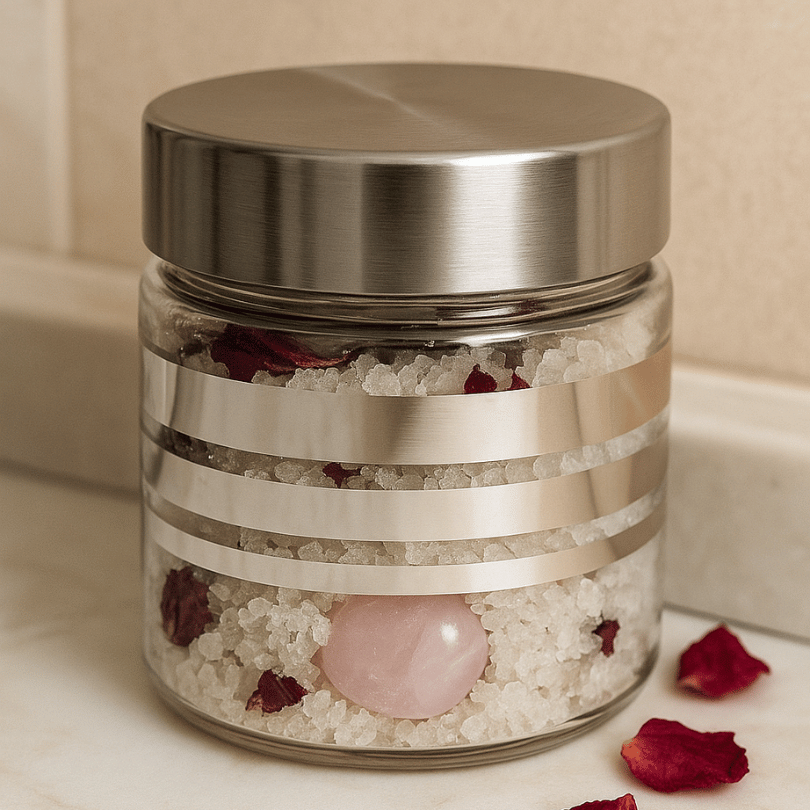
If you’d like to make this cleansing ritual even more intentional, you can use Subheccha Ojas Spiritual Bath Salt. Infused with mineral-rich salts and thoughtfully crafted for aura cleansing and inner peace, it helps transform an ordinary bath into a mindful self-care ritual. It is a beautiful addition to your Full Moon practice, helping you release stagnant energy and step into a renewed state of mind.
Explore Ojas Spiritual Bath Salt to elevate your spiritual bathing ritual.
What To Do During This Eclipse
- Pause
- Reflect
- Meditate
- Journal
- Trust Divine timing
- Practice gratitude
- Spend time in silence
What To Avoid During This Eclipse
- Preparing fresh Moon Water — this is Solar, not lunar, energy; save Moon Water rituals for the next Full Moon.
- Charging new crystals — let existing charged crystals carry you through instead.
- Forcing manifestations — today is for receiving, not chasing.
- Seeking immediate answers — some clarity needs time to unfold; don’t rush it.
- Rushing big decisions — if you can, let important choices wait a few days past the eclipse.
Frequently Asked Questions
Q1. What does the Leo New Moon symbolize?
The Leo New Moon symbolizes courage, authentic self-expression, and a return to your own inner light. Leo asks you to stop shrinking yourself for others and reconnect with your natural confidence. Paired with a Solar Eclipse, this becomes less about outward action and more about quietly rediscovering the light you already carry, even when it feels temporarily hidden.
Q2. Why is this Solar Eclipse considered significant?
This eclipse pairs a Total Solar Eclipse with a New Moon, intensifying themes of endings, hidden truths, and new beginnings. Total eclipses are considered especially potent because the Sun’s light is fully covered for a short time. Spiritually, I see this as an invitation to trust that your path continues even when clarity feels momentarily obscured.
Q3. Can complete beginners perform this Mandala Meditation ritual?
Absolutely. This ritual is gentle and beginner-friendly. You don’t need prior meditation experience, artistic skill, or astrological knowledge to benefit from it. All you truly need is a quiet space, a willingness to slow down, and an open heart. The Mandala simply gives your mind something calm to focus on while your inner world settles.
Q4. Why is Mandala Meditation recommended today?
Mandalas are natural mindfulness tools — their repeating, symmetrical patterns calm the nervous system and quiet mental chatter. During an eclipse, when energy can feel unpredictable, a Mandala offers something steady to focus on, helping you enter stillness gently rather than forcing it through willpower.
Q5. Can I journal instead of colouring a Mandala?
Yes, completely. Colouring and journaling both lead you toward the same inner stillness — they’re simply different doorways. If writing helps you process emotions more naturally than colouring, follow the journaling prompts I’ve shared instead. There’s no wrong choice; choose whichever feels more honest to you today.
Q6. Why shouldn’t I prepare Moon Water during this ritual?
Moon Water is traditionally prepared under lunar energy, ideally during a Full Moon. A Solar Eclipse carries a very different quality, and I find it’s best to let this day unfold quietly rather than adding new preparatory rituals. If you already have charged Moon Water from your last Full Moon, feel free to continue using that.
Q7. What if I don’t feel anything during the meditation?
This is completely normal — please don’t see it as failure. Not every meditation brings dramatic insight or emotion. Sometimes stillness itself is the point, and the shift happens quietly, revealing itself in the days that follow rather than in the moment itself.
Q8. Can I use incense or Palo Santo instead of a diya?
Yes, absolutely. I’ve suggested a diya or candle here because of Leo’s fiery energy, but you’re welcome to use sage, Palo Santo, or incense if that feels more natural. The intention behind the cleansing matters far more than the tool itself.
Q9. How long should I meditate during this ritual?
There’s no fixed time requirement. Some people complete it in fifteen minutes; others take closer to an hour. Rather than watching the clock, let your body tell you when you’re done — your mind will feel lighter, and your heart will feel calmer.
Key Takeaways
- This eclipse pairs a New Moon in Leo with a Total Solar Eclipse — a rare and potent celestial moment.
- Today is about receiving and reflecting, not forcing new manifestations.
- Leo energy invites you to reconnect with your own courage, creativity, and inner light.
- The Mandala Meditation ritual is simple, beginner-friendly, and requires no prior experience.
- Journaling is a valid, equally powerful alternative if colouring doesn’t resonate with you.
- Skip fresh Moon Water and crystal charging today; let existing charged items carry you through.
- Whatever you feel — or don’t feel — during the ritual is completely valid.
- Trust that your clarity, like the Sun during an eclipse, is only hidden — never gone.
| Continue Your New Moon Journey If today’s ritual resonated with you, know this is just the beginning. If you’d like to go deeper into New Moon rituals — how they differ from Full Moon practices, right timing, and guided rituals month after month — I’d love to welcome you into my dedicated New Moon Course, along with more guided meditations and New Moon articles on my website. |
May this eclipse gently remove what no longer serves you, and guide you toward the path meant for you. Wishing you a beautiful, peaceful New Moon, filled with courage and light.
With love,
Sawan Somwar 2026: Why the Mondays of Sawan Feel
Quick Answer: Sawan Mondays are considered powerful because Lord Shiva is believed to be especially close to His devotees during this monsoon month, and Monday itself is His day. In 2026, North India observes four Sawan Somwar – August 3, 10, 17, and 24 – with Sawan Shivratri falling on Tuesday, August 11, 2026. Many devotees use these weeks for prayer, fasting, meditation, and simple acts of self-discipline.
The moment Sawan arrives, the same questions begin to circulate everywhere.
“Should I keep the Monday fast?”
“Can anyone observe Sawan Somwar?”
“Will 16 Somvar help me get married?”
“Why do lakhs of devotees walk for the Kanwar Yatra every year?”
“Why is this month considered so powerful for Lord Shiva?”
These are all beautiful questions. But there’s one question we rarely ask ourselves.
Why did our ancestors dedicate an entire month to Shiva in the first place?
The answer goes far beyond rituals, fasting, or fulfilling wishes. Sawan is actually an invitation to slow down, purify your mind, and reconnect with yourself.
What Is Sawan, Really?
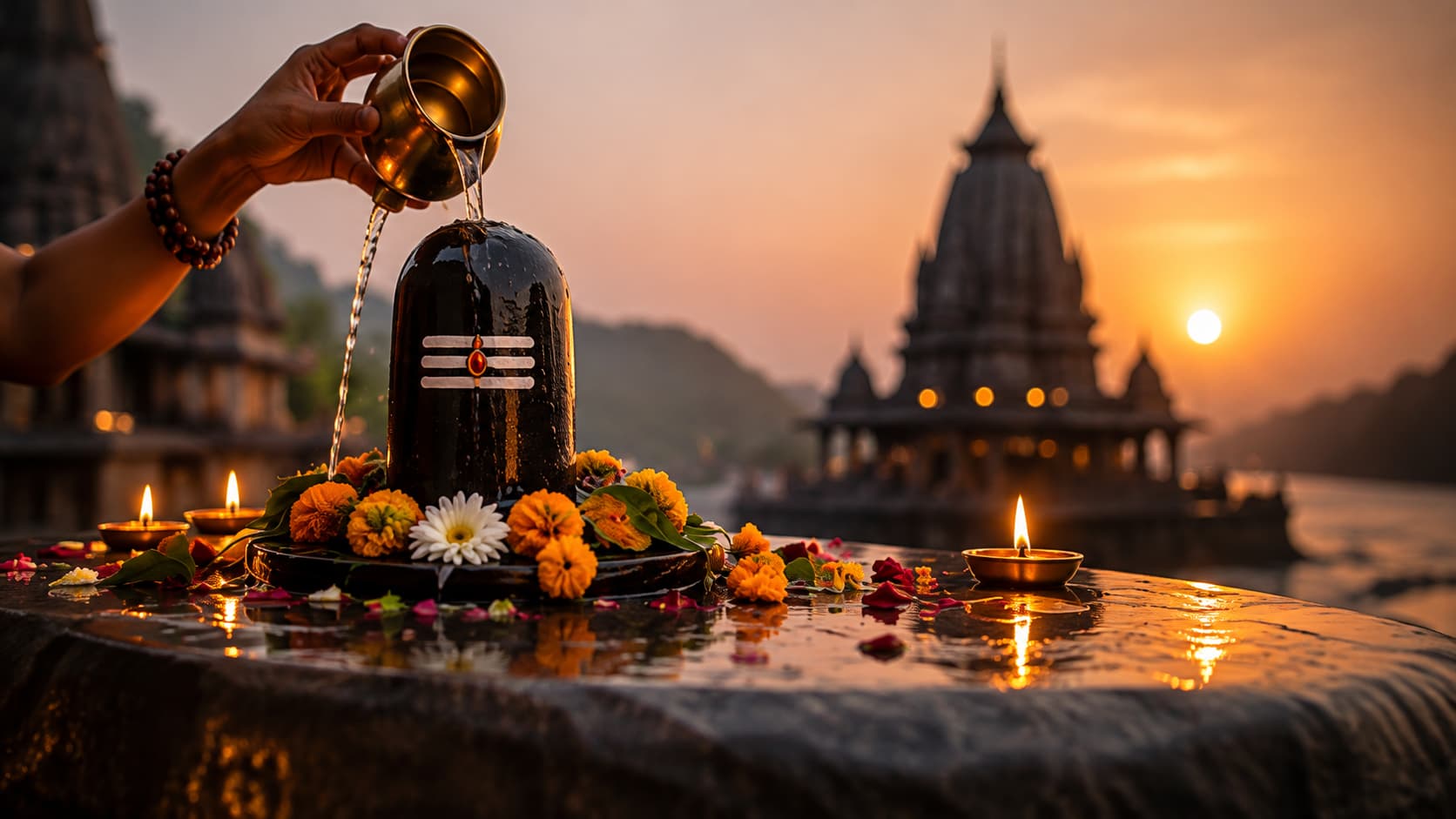
Sawan also called Shravan – is the fifth month of the Hindu lunar calendar, and it usually falls during the monsoon season. In 2026, Sawan runs from Thursday, July 30 to Friday, August 28 in North India (the Purnimanta calendar), and from August 13 to September 11 in Maharashtra, Gujarat, Karnataka, Andhra Pradesh, and Telangana (the Amanta calendar). If you follow a regional tradition, always check your local panchang, since dates can shift by up to two weeks depending on where you live.
This entire month is dedicated to Lord Shiva. According to the Shiva Purana, Sawan is connected to one of the most moving stories in our scriptures – the Samudra Manthan, the churning of the cosmic ocean. When a deadly poison called Halahala rose up and threatened to destroy the universe, Lord Shiva drank it Himself to protect all beings, holding it in His throat rather than letting it spread. That single act of sacrifice is why devotees dedicate this month to Him with such tenderness. The rains of Sawan are seen as nature performing its own abhishek – its own sacred bathing – of the earth, the same way we pour water over the Shivling in our temples.
Why Is Monday Shiva’s Day?
You’ve probably noticed that Monday is called “Somvar” and “Som” is another name for the moon, which Lord Shiva wears on His forehead. Devotees have worshipped Shiva on Mondays throughout the year for generations, but during Sawan, this weekly devotion becomes something deeper.
I think of it this way: if praying to Shiva on any ordinary Monday is like knocking on a door, praying to Him on a Sawan Monday is like finding that door already open, with someone waiting on the other side.
Why Sawan Mondays Feel Especially Powerful

Over the years, I’ve come to believe this power isn’t only spiritual – it’s also very human. A few things happen at once during Sawan:
- The season itself softens us. Monsoon rains slow everything down. We stay indoors more, we reflect more, and that natural stillness makes prayer feel less forced.
- Collective devotion amplifies energy. When millions of people are praying, fasting, and chanting during the same weeks, there’s a shared current that’s genuinely felt, even if it’s hard to explain in words.
- Discipline becomes achievable. A single Monday of restraint is easy. Four Mondays, one after another, start to build a habit and habits are where real transformation quietly happens.
- Nature mirrors renewal. Just as the earth turns green again after the first rains, Sawan invites an inner “greening” a chance to let go of what’s dried up in us and let something new grow.
None of this needs fear to make sense. I want to be honest with you: no scripture says something terrible will happen if you skip a Monday fast. Fasting and prayer during Sawan are acts of devotion and discipline, not insurance against misfortune. Please don’t let anyone frighten you into a ritual. Come to it because it feels meaningful, not because you’re afraid of what happens if you don’t.
Sawan Somwar 2026: The Four Mondays
Here are the confirmed dates for North India this year.
| Sawan Monday | Date (2026) |
| First Sawan Somwar | Monday, August 3 |
| Second Sawan Somwar | Monday, August 10 |
| Third Sawan Somwar | Monday, August 17 |
| Fourth Sawan Somwar | Monday, August 24 |
(If you follow the Amanta calendar – common in Maharashtra, Gujarat, Karnataka, Andhra Pradesh, and Telangana – your Sawan Mondays will fall roughly two weeks later, since your Shravan month begins mid-August. Please confirm with your family’s panchang.)
Sawan Shivratri 2026
Mark this date clearly: Sawan Shivratri falls on Tuesday, August 11, 2026, with the main midnight worship carrying into the early hours of August 12.
People often ask me how this is different from Mahashivratri, the “great night of Shiva” celebrated earlier in the year. Mahashivratri is the larger, more widely known festival, observed once annually and considered the most significant Shivratri of all. Sawan Shivratri, on the other hand, is the monthly Shivratri that happens to fall within the sacred month of Shravan – which is precisely what makes it so special this time. It carries the weight of Shivratri and the grace of Sawan, together.
A Simple Sawan Somwar Ritual You Can Actually Follow
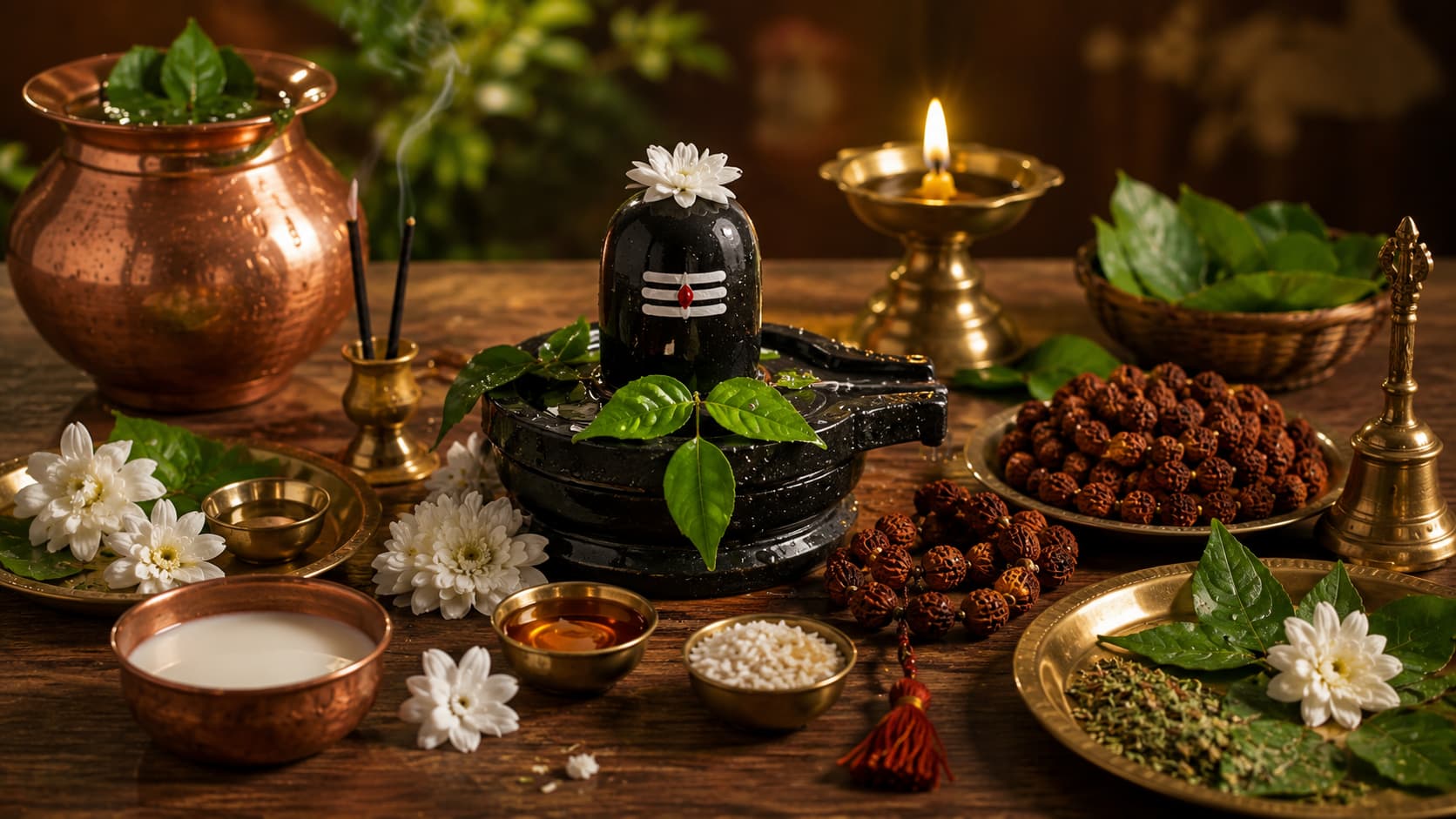
You don’t need an elaborate setup to observe Sawan meaningfully. Here is the simple routine I recommend to people who are just beginning:
- Wake and bathe early, if possible, before sunrise.
- Offer water or milk to a Shivling, according to your family’s tradition — even a small home shrine is enough.
- Offer Bilva (Bel) leaves, which are considered especially dear to Lord Shiva.
- Sit for a few minutes of quiet meditation. Even five minutes counts.
- Chant a mantra, even softly, even once.
- Do one small act of kindness during the day – this matters more than people realize.
- Close the day with gratitude, thanking Shiva for whatever the day brought, good or difficult.
That’s the whole ritual. Simplicity is not a lesser form of devotion – it’s often the truest form.
Powerful Shiva Mantras for Sawan
| Mantra | Meaning | Best Time to Chant |
| Om Namah Shivaya | “I bow to Shiva” – the simplest, most complete surrender to the divine | Morning or during meditation |
| Mahamrityunjaya Mantra | A prayer for health, protection, and freedom from the fear of untimely death | Early morning or at dusk |
| Om Sarv Mangal Mangalye | An invocation of auspiciousness and well-being, often paired with prayers to Shakti | During evening puja |
You don’t need perfect Sanskrit pronunciation. What matters far more is chanting with full attention rather than rushing through a count. I would rather someone chant Om Namah Shivaya eleven times slowly, with their whole heart in it, than a hundred times while thinking about something else entirely.
Thinking of Wearing Rudraksha This Sawan?
Sawan is considered one of the most auspicious times to begin wearing a Rudraksha. However, choosing the right Mukhi based on your purpose and understanding how to energise, wear, and care for it is equally important.
If you’re looking for authentic, energised Rudraksha, you can explore our carefully curated collection at shop.drneetikaushik.com.
If you’d like to understand the deeper science and significance of Rudraksha before choosing one, our Complete Rudraksha Reference Guide on drneetikaushik.com covers everything you need to know, including which Rudraksha is suitable for you, the spiritual significance of each Mukhi, myths versus facts, how to wear it correctly, and the common mistakes to avoid.
Sawan Isn’t Just About Fasting
This is something I say every single year, and I’ll say it again here – Sawan is so much bigger than what we eat or don’t eat. If fasting isn’t right for your body or your health, please don’t force it. There are so many other ways to observe this month with sincerity:
- Reading a few pages of the Shiva Purana or any spiritual text that moves you
- Taking a quiet walk in the rain and simply noticing nature
- Keeping a short gratitude or reflection journal each evening
- Practising a digital detox for even an hour a day
- Doing one act of genuine kindness — feeding an animal, helping a stranger, calling a parent
- Practising forgiveness toward someone you’ve been holding a grudge against
I’ve watched people transform more during a month of quiet reflection than during years of ritual performed without presence. Sawan rewards sincerity, not intensity.
How I Personally Observe Sawan: My Seven Daily Practices
People sometimes assume that after thirty-five years in this field, my own Sawan routine must be elaborate. It isn’t. Here’s what I actually do, every single day of this month:
- I begin the day with a moment of gratitude before my feet even touch the floor.
- I chant Om Namah Shivaya slowly, paying attention to each word rather than rushing the count.
- I sit in silence for a few minutes – no phone, no plans, just breath.
- I read a small passage from a text I love, even if it’s just a paragraph.
- I try to do one conscious act of kindness, however small.
- I write a few lines in my journal before bed – what moved me, what I’m grateful for.
- I end the day thanking Shiva, regardless of how the day actually went.
That’s it. No grand ceremony. Just consistency, held with love.
Common Mistakes I See Every Sawan
- Focusing only on the outer ritual while ignoring the inner shift it’s meant to inspire
- Comparing your devotion to someone else’s – this isn’t a competition
- Following social media trends blindly, without understanding the “why” behind a practice
- Expecting instant miracles, and feeling disappointed or doubting your faith when life doesn’t change overnight
- Treating fasting as punishment rather than a gentle discipline chosen from love
Frequently Asked Questions
Q1. When is Sawan Shivratri 2026?
Ans. Sawan Shivratri falls on Tuesday, August 11, 2026, with the main midnight worship continuing into the early hours of August 12.
Q2. How many Sawan Mondays are there in 2026?
Ans. North India observes four Sawan Somwar – August 3, 10, 17, and 24. Regions following the Amanta calendar observe their four Mondays roughly two weeks later.
Q3. Can working professionals observe Sawan meaningfully?
Ans. Absolutely. A short morning prayer, one mindful mantra, and a moment of gratitude before bed are enough. Devotion doesn’t require hours – it requires presence.
Q4. Can women observe Sawan Somwar Vrat?
Ans. Yes. Sawan Somwar is observed by devotees of all genders. If you’re pregnant, unwell, or menstruating, please prioritise your health and consult your family tradition – devotion never requires you to harm yourself.
Q5. What if I can’t fast for health reasons?
Ans. Please don’t fast. Offer a prayer instead, chant a mantra, or perform one act of kindness. Shiva doesn’t need your hunger – He asks for your heart.
Q6. Which mantra should a beginner start with?
Ans. Om Namah Shivaya. It’s simple, complete, and needs no elaborate preparation.
Q7. Can I wear Rudraksha during Sawan?
Ans. Yes, many devotees choose to begin wearing Rudraksha specifically during this month, as it’s considered an especially auspicious time to start.
Q8. Do the dates differ by region?
Ans. Yes. North India follows the Purnimanta calendar; Maharashtra, Gujarat, Karnataka, Andhra Pradesh, and Telangana follow the Amanta calendar, which begins about two weeks later. Always confirm with your local panchang.
Key Takeaways
- Sawan 2026 runs July 30 to August 28 in North India, with four Sawan Somwar: August 3, 10, 17, and 24.
- Sawan Shivratri 2026 falls on Tuesday, August 11.
- Monday is sacred to Shiva because of His connection to the moon (Som); Sawan Mondays carry that devotion even further.
- Fasting is one path among many — meditation, kindness, and reflection matter just as much.
- Consistency in small practices, done with full presence, means more than grand rituals performed on autopilot.
If this is your first Sawan approaching with real intention, please be gentle with yourself. You don’t need to get every ritual perfect. You simply need to show up – with your imperfect prayers, your busy schedule, your ordinary Monday – and let that be enough. Because it is.
Har Har Mahadev.
The August 2026 Eclipse: What I Believe It’s Really Asking Us to Heal
There are certain skies that feel different even before you look up at them. I have watched eclipses come and go for over three decades now, and I can tell you honestly, this one feels different. Not scarier. Just heavier, in the way a long overdue conversation feels heavy right before you finally have it.
On August 12, 2026, we experience a Total Solar Eclipse, falling exactly on Amavasya, the new moon. And this time, it arrives while Saturn is already retrograde, a slow, serious placement that began on July 27, 2026, and continues for months. When these two forces meet, something shifts in the air. I have felt it in my own life during similar windows, and I want to walk you through it the way I would explain it to someone sitting across from me, not as a warning, but as a companion for the days ahead.
What Is Actually Happening Up There
Let’s start simply, because astrology should never feel confusing.
A solar eclipse can only happen on Amavasya, when the Sun and Moon sit together in the sky and the shadow points Rahu or Ketu step in between them. In Vedic astrology, this is read as a moment when:
- the conscious mind gets temporarily shadowed
- the emotional mind becomes more sensitive
- clarity dips for a while
- old, buried karma quietly rises to the surface
- whatever part of your chart this eclipse touches becomes activated, sometimes suddenly
For this particular eclipse, the themes it lights up most strongly are home, emotional security, nourishment, inner peace, and karmic memory. If you have felt an unexplained pull toward your childhood home lately, or found yourself thinking about your mother more than usual, this is likely why.
Why This One Feels So Much Stronger
Here is the part I want you to really sit with.
Saturn is retrograde right now, and it stays that way well past this eclipse. Saturn retrograde, in my experience and in classical Vedic understanding, always asks us for:
- a review of unfinished responsibilities
- honesty about delayed results
- accountability for old patterns
- a slower, more mature pace of decision making
- correction of mistakes we have been avoiding
When an eclipse lands during Saturn retrograde, the two energies do not cancel each other out. They deepen each other. Old situations return. People feel emotionally heavier than usual. Decisions that felt easy last month suddenly feel like they need more thought. Life, quite literally, asks you to slow down.
I do not read this as punishment. I read it as an invitation. Saturn does not open old wounds to hurt you. Saturn opens them because it is finally safe enough, and you are finally strong enough, to look at them properly.
Also read: If You Wake Up Between 3 AM and 5 AM, Never Do These 5 Things
Is This a “Bad” Eclipse? I Don’t Believe So
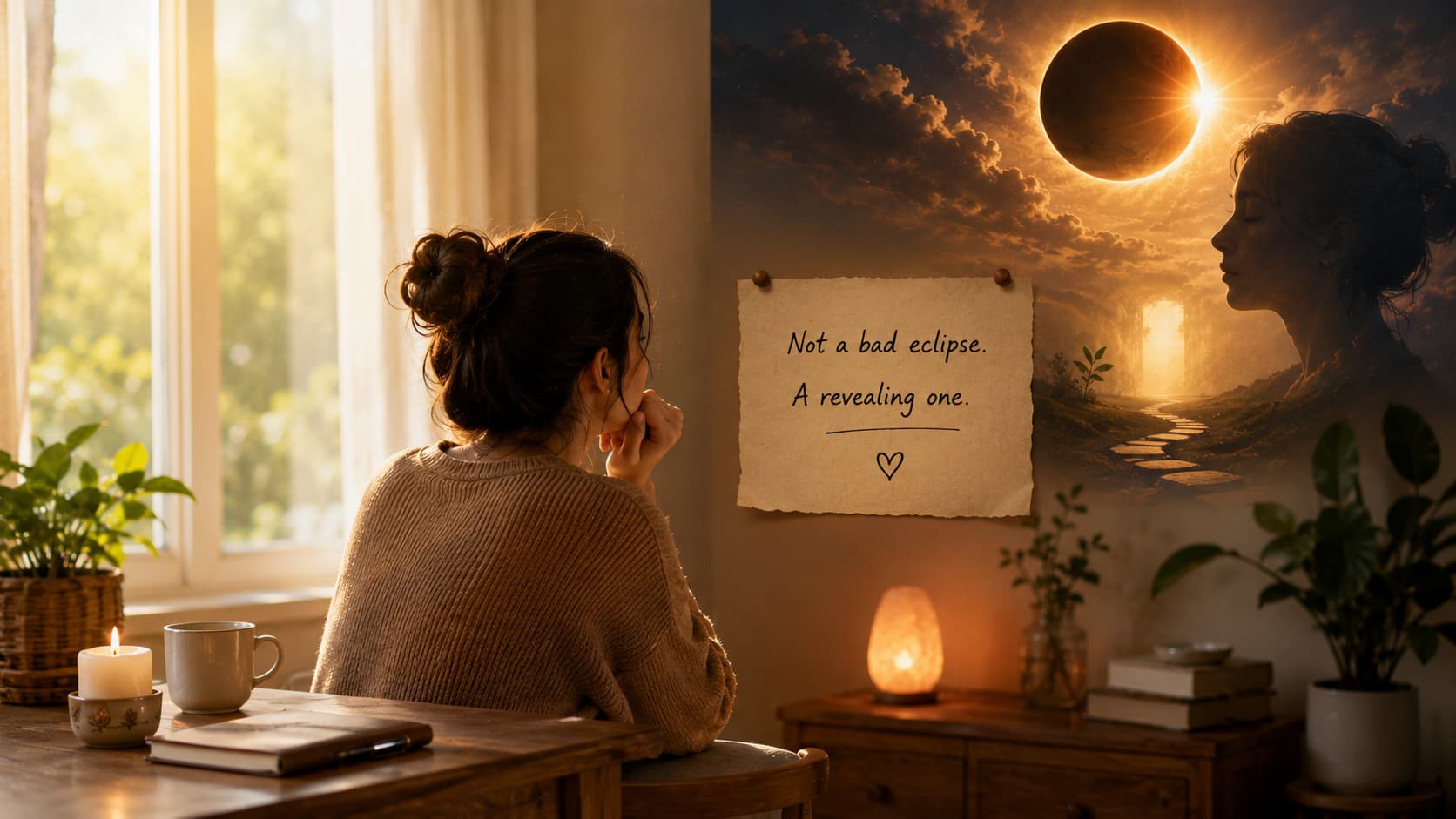
I want to be very clear here, because I know eclipse season can bring up fear, and fear is never the medicine.
This is not a bad eclipse. It is a revealing one.
It simply shows you:
- where you are emotionally attached
- where an old fear has been quietly sitting
- where your sense of security has grown weak
- where your next stage of growth is asking for a little more maturity from you
You may feel more sensitive than usual over these weeks. You may feel a little more introspective or notice old family patterns surfacing in conversations you did not expect. This is not a sign that something is wrong with you. It is a sign that something inside you is finally ready to be seen.
How Long Does an Eclipse Actually Affect Us?
One question I get asked every single eclipse season is, “How long will I feel this?” So let me lay it out plainly, because understanding the timeline genuinely helps you stop panicking about every mood shift.
| Time Window | What You May Notice |
| 7 to 15 days before the eclipse | Emotional build up, tiredness, heightened sensitivity, mental fog |
| Eclipse day and around 3 days after | The strongest energetic disturbance, sudden realizations, emotional peaks |
| Next 45 days | Visible triggers, real decisions, emotional aftershocks working themselves out |
| Next 3 to 6 months | The actual life results unfold, especially in the area of life this eclipse touched |
I always tell my students the same thing. The eclipse itself is only one day. But its message can take up to six months to fully unfold. So be patient with yourself. You are not overreacting. You are simply in the middle of a longer process.
Who Feels This the Most
Every single sign will feel some version of this eclipse, because Saturn retrograde is a shared, collective weather system that all of us are standing under. But from the Vedic sign framework, the impact tends to land a little more strongly for Cancer, Capricorn, Aries, Libra, Pisces, and Leo.
That said, please do not read this and assume you are exempt if your sign is not on this list. I always encourage people to check both their Moon sign and their Ascendant, because eclipses are personal even when they are collective.
Here is a simple snapshot of the life areas this eclipse tends to touch, sign by sign:
| Sign | Life Area Most Activated |
| Aries | Home, mother, emotional safety, property |
| Taurus | Communication, siblings, skills, networking |
| Gemini | Finances, family values, self-worth |
| Cancer | Identity, body, personal reset (a very strong placement) |
| Leo | Rest, hidden fears, subconscious healing |
| Virgo | Friendships, social circle, future goals |
| Libra | Career, reputation, public image |
| Scorpio | Beliefs, higher learning, father, gurus |
| Sagittarius | Shared finances, intimacy, deep transformation |
| Capricorn | Marriage, partnerships, contracts |
| Aquarius | Health, daily routine, stress patterns |
| Pisces | Romance, children, creativity, self-expression |
If your sign’s theme feels uncomfortably accurate, that is not a coincidence. That is the eclipse doing exactly what it is meant to do.
What I Would Personally Suggest You Do
Over the years, I have learned that how we behave during an eclipse window matters far more than what the eclipse itself brings. Here is what I quietly practice, and what I gently suggest to everyone I work with.
During this eclipse period, try to:
- avoid making major, irreversible decisions exactly around the eclipse hours if you can help it
- step away from unnecessary arguments, especially at home
- give yourself extra time for mantra, prayer, silence, or meditation
- keep your food light and simple
- resist the urge to manifest from a place of fear or urgency
- let the emotional dust settle fully before you commit to anything big
- keep a journal nearby, because a lot may quietly surface that you will want to remember later
A few remedies I personally return to during eclipse windows:
- chanting the Maha Mrityunjaya Mantra
- chanting the Gayatri Mantra
- offering water to Surya once the eclipse period has passed
- standing barefoot on the earth for a few quiet minutes
- donating food, or helping someone in need
- being extra mindful with your words on eclipse day itself
- sitting in silence on the night of Amavasya, even if only for ten minutes
None of these need to be elaborate. Some of my most powerful eclipse experiences have simply been ten quiet minutes with my eyes closed and my hand over my heart.
What This Eclipse Is Really Trying to Tell You
If I had to sum up what I feel about this August 2026 eclipse in one honest sentence, it would be this. It is not here to punish anyone. It is here to reveal where your emotional karma, your family patterns, and your inner insecurities are finally ready to be healed, and it is asking you to meet that healing with maturity, because Saturn retrograde is standing right beside it, demanding truth, responsibility, and real spiritual growth.
I know eclipse seasons can feel unsettling. I have felt that same unsettled energy myself, more times than I can count. But every single time, on the other side of it, I found a version of myself that understood a little more, feared a little less, and trusted her own path a little more deeply.
You do not need to fix everything this eclipse brings up right away. You only need to notice it, sit with it gently, and let it teach you what it came to teach.
If you would like more guidance for navigating this eclipse season, from personalized readings to grounding rituals and healing tools, I would love for you to explore what I have put together for you on my website. This is exactly the kind of season I built those resources for.
With love and light,
For more detailed, visit our YouTube channel- “Nitty Gritty with Dr Neeti Kaushik”